Introduction
Hereditary transthyretin amyloidosis (vATTR) is a progressive genetic disorder with several approved treatments. We investigated treatment responses to tafamidis and patisiran in vATTR patients to identify predictive response factors.
Methods
Retrospective analysis on vATTR patients treated with tafamidis or patisiran from October 2012 to September 2022. Treatment responses were assessed as “good,” “partial,” or “non-response.” We analysed pre-treatment clinical and laboratory data to identify predictors of treatment response.
Results
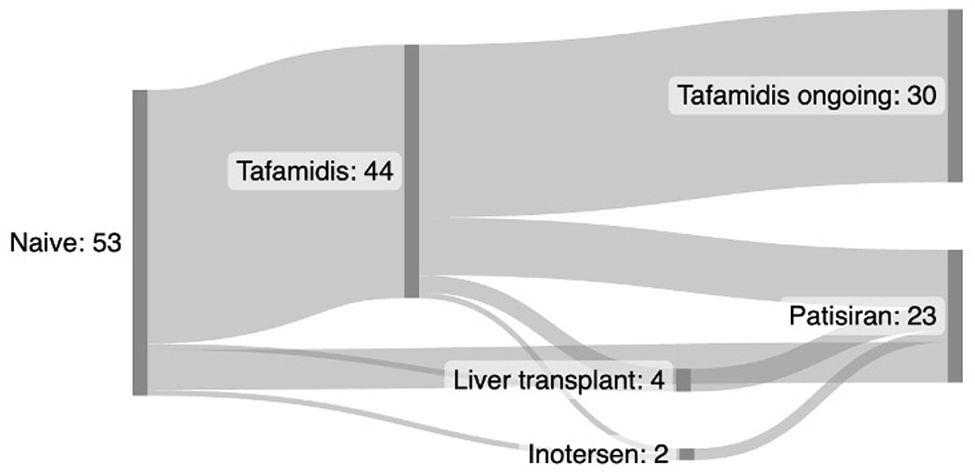
Of the 53 patients, 44 received tafamidis and 23 received patisiran; 14 were treated with both drugs sequentially. Predictors of good response to tafamidis were shorter diagnostic delay (≤1 year), less severe neurological impairment (Coutinho stage 1, Neuropathy Impairment Score [NIS]≤7), and better sudomotor function in the feet (≥50μS) before treatment. Factors associated with non-response were greater disability (baseline Polyneuropathy Disability score=2), large fibre involvement, and significant weight loss. Predictors of a good response to patisiran included lower pre-treatment disease severity (Coutinho stage 1, NIS≤40). We propose an individualised therapeutic approach using predictive factors to guide initial treatment.
Conclusions
This study identifies predictive factors for response to tafamidis and patisiran in vATTR patients, highlighting baseline NIS as a critical predictor. We propose a novel therapeutic algorithm for personalised treatment strategies with potential to avoid years of ineffective treatment.