Background/objective
There is no consensus on the response rates of secukinumab, as findings from phase III trials differ from those reported in clinical-practice studies. This study aimed to assess the mid-term safety and efficacy profile of secukinumab in patients with moderate-to-severe Hidradenitis suppurativa (HS).
Methods
This retrospective, multicenter study included patients with moderate-to-severe HS treated with secukinumab (300mg every four weeks) between 2020 and 2024. Eligible patients were aged ≥18 years, with a clinical diagnosis of moderate-to-severe HS, and a minimum follow-up of 24 weeks. Key exclusions included patients treated with nonstandard secukinumab dosing regimens or those with insufficient clinical data. The primary endpoints were achievement of HiSCR50 (≥50% reduction in the combined count of nodules and abscesses) at weeks 16 and 24). Secondary endpoints included achieving a ≥55% reduction in the International HS Severity Score (IHS4-55) and adverse events.
Results
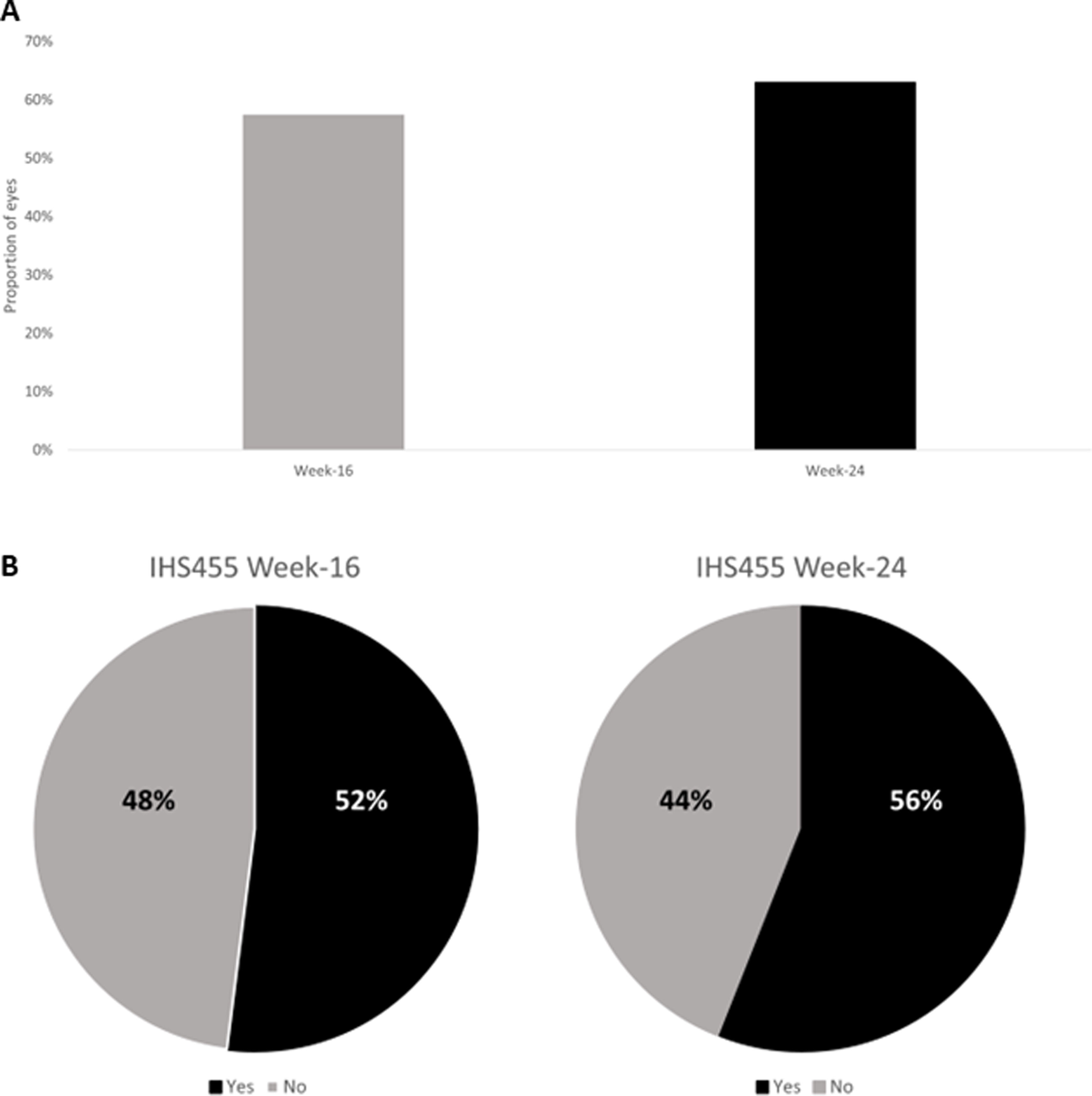
A total of 263 patients (49.4%, women; 50.6%, men; mean age, 41.8±13.2 years) were included. The most common HS phenotype was mixed (49.4%), and 55.1% had Hurley stage III disease. At weeks 16 and 24, a total of 57.4% and 63.6% of patients achieved HiSCR50, respectively. The mean IHS4 score dropped significantly from 16.7±10.0 at baseline to 7.6±5.6 at week 24 (p<0.0001). At weeks 16 and 24, 52% and 56% of patients achieved an IHS4-55 response. Secukinumab was discontinued in 14.5% of patients because of lack of efficacy or adverse events.
Conclusions
Secukinumab demonstrated a significant safety and efficacy profile for patients with moderate-to-severe in a real-world setting, with better outcomes than those reported in earlier clinical trials. Response evaluation at both week 16 and 24 is crucial due to variations in treatment effectiveness.