Objective
To perform a cross-cultural adaptation and validation of the Diabetic Foot Questionnaire (DiaFootQ) into Spanish (DiaFootQ-Sp).
Design
Cross-cultural adaptation, validity and reliability study.
Site
Diabetic Foot Unit (Regional University Hospital of Malaga, Spain), Podiatry Teaching Unit (University of Malaga, Spain) and private clinics across Spain.
Participants
Adults over 18 years old with type 2 diabetes mellitus who were referred for diabetic foot examination or already enrolled with DFD.
Methods
An observational study was conducted in two phases: (1) translation and cross-cultural adaptation of the DiaFootQ into Spanish and (2) psychometric validation of the DiaFootQ-Sp. Recommendations by ISPOR Task Force for Translation and Cultural Adaptation were followed. Reliability and validity were assessed using internal consistency (Cronbach’s α), test–retest reliability (ICC), and construct validity through factor analysis. Criterion validity was evaluated by correlating DiaFootQ-Sp with the Foot Function Index (FFI), SF-12v2, and EuroQoL.
Results
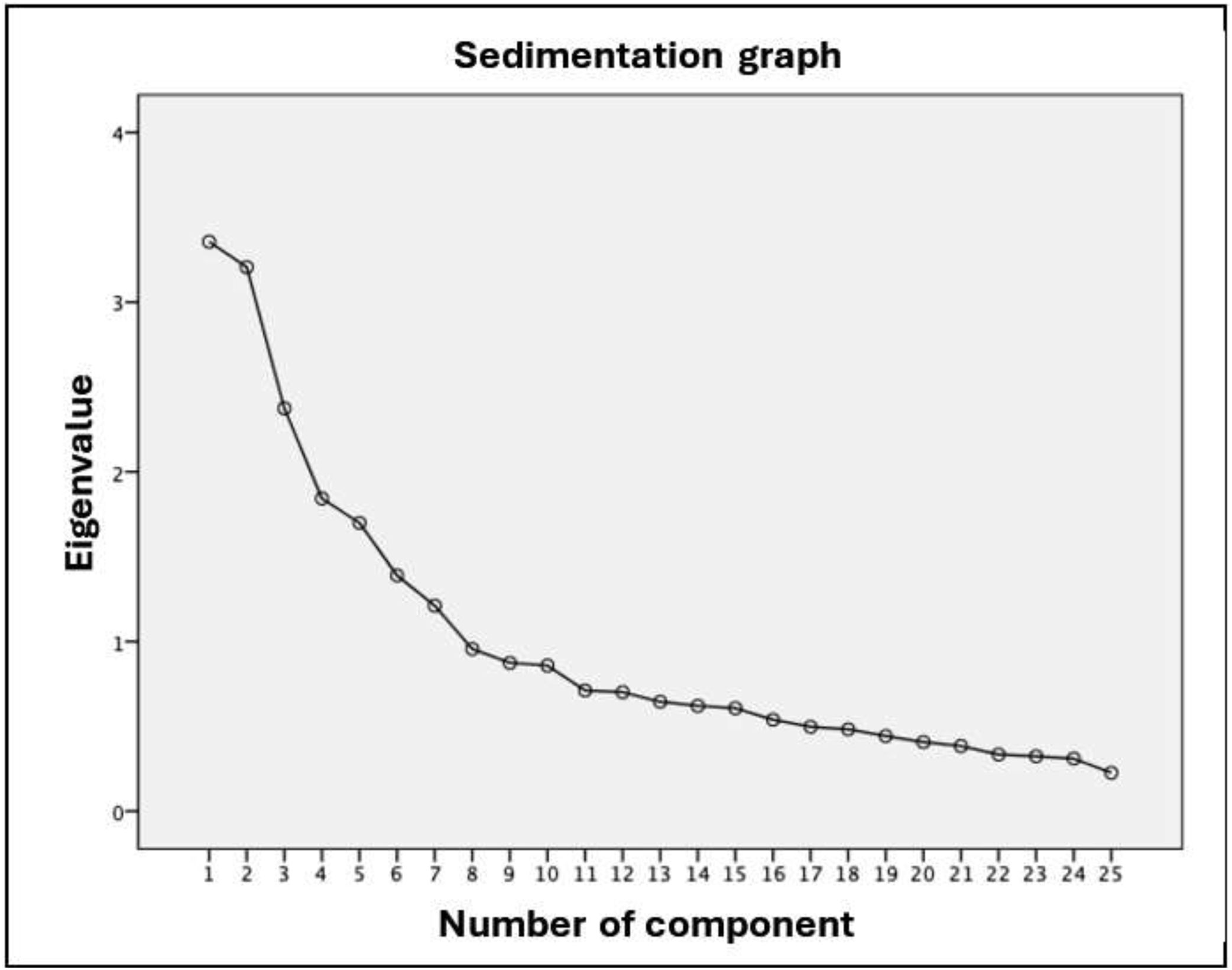
A total of n=466 participants completed the study. The DiaFootQ-Sp showed strong internal consistency (Cronbach’s α=0.903) and high test–retest reliability (ICC=0.854–0.997). Sensitivity analysis reported SEM=2.195 and MDC90=5.121. Construct validity was confirmed (KMO=0.677, Bartlett’s test p<0.001). Criterion validity showed significant correlations with the EuroQol-5D (r=0.889) and SF-12 (r=0.353). The mean completion time was 8.61min.
Conclusions
DiaFootQ was successfully adapted and validated for Spanish-speaking population, providing a useful and reliable tool to assess patients with DFD. The quality of care and prevention might be enhanced by implementing this instrument in clinical practice.