Introduction
Seizures are one of the main neurological reasons for admission to paediatric emergency departments (ED). The prompt and appropriate management of acute seizures is crucial to improve patients’ outcomes, with prehospital care playing a critical role in this matter.
Methods
We conducted a retrospective cross-sectional study of patients under 18 years old admitted due to seizures to a metropolitan paediatric ED during the period of 1 year (June 2023–May 2024). Prehospital management and its association with clinical evolution were analyzed.
Results
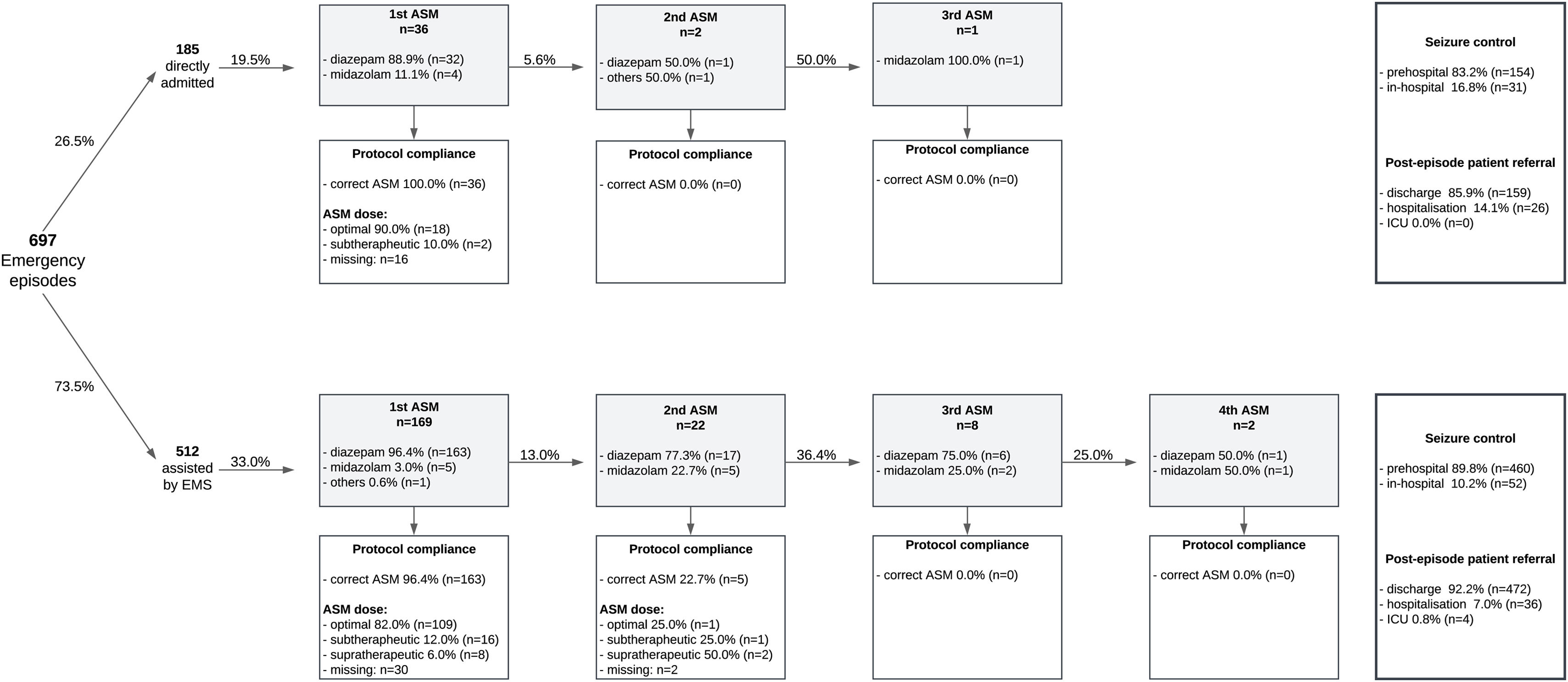
A total of 697 emergency episodes of seizures were identified: 47.1% (n=328) epileptic seizures; 41.6% (n=290) febrile seizures; 6.7% (n=47) convulsive status epilepticus (SE); and 4.6% (n=32) febrile SE. Patients were referred to the ED by the emergency medical services (EMS) in 73.5% (n=512) of the episodes. A first dose of an antiseizure medication (ASM) was administered in the prehospital setting in 29.4% (n=205) of the episodes, using a benzodiazepine in 99.5% (n=204). The prehospital ASM administration was more frequent in patients assisted by EMS (p<0.001). Prehospital protocol compliance was verified in 71.7% (n=114) of the episodes. Patients assisted by EMS had a higher likelihood of prehospital seizure control and hospital discharge (p<0.05).
Conclusions
The contribution of prehospital care was demonstrated by its association with higher prehospital seizure control and lower patient’s hospitalization. These findings emphasize the relevance of studying the prehospital approach, allowing to identify improvement opportunities, not only related to EMS procedures, but also to the caregivers’ knowledge about paediatric seizures.