Introduction
Trauma represents a significant global health burden, yet dedicated trauma education is frequently deficient in undergraduate medical curricula. Consequently, medical students often report lack of preparedness to manage trauma cases. The optimal approach to integrate trauma education in medical school curricula remains unclear.
Objective
To evaluate the feasibility of implementing large-scale simulation-based trauma education within the core medical curriculum and assess student perceptions.
Methods
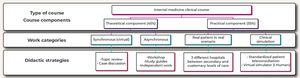
An Initial Trauma Management Course was devised and implemented as part of the standard surgery clerkship. The course combined a lecture and case-based learning with three simulation-based hands-on stations. Small-group teaching was employed. Twelve course editions per year (up to 30 students each) accommodated an annual capacity of 360 students.
This was a mixed method cross-sectional study with a prospective component. Students completed a post-course survey with Likert-scale items and open-ended comments. Quantitative data were analyzed using descriptive statistics, and thematic content analysis was conducted on qualitative data from student commentary.
Results
Over a two-year period, 685 students attended the course and 622 completed the survey (91% participation rate). Over 90% of respondents rated all the course’s components and stations very relevant. Qualitative analysis identified hands-on training, use of simulation/manikins, content relevance, quality of instructors and interactive learning as the most valued aspects.
Conclusion
The implementation of a simulation-based trauma course as part of the undergraduate core curriculum was feasible and highly valued by students. These findings support broader integration of structured trauma education and offer a scalable model for other institutions.