Objective
This study aimed to investigate the interrelationship between sleep disturbances, heart rate variability (HRV), and the risk of sudden unexpected death in epilepsy (SUDEP), with a focus on identifying novel risk factors related to sleep and autonomic function.
Methods
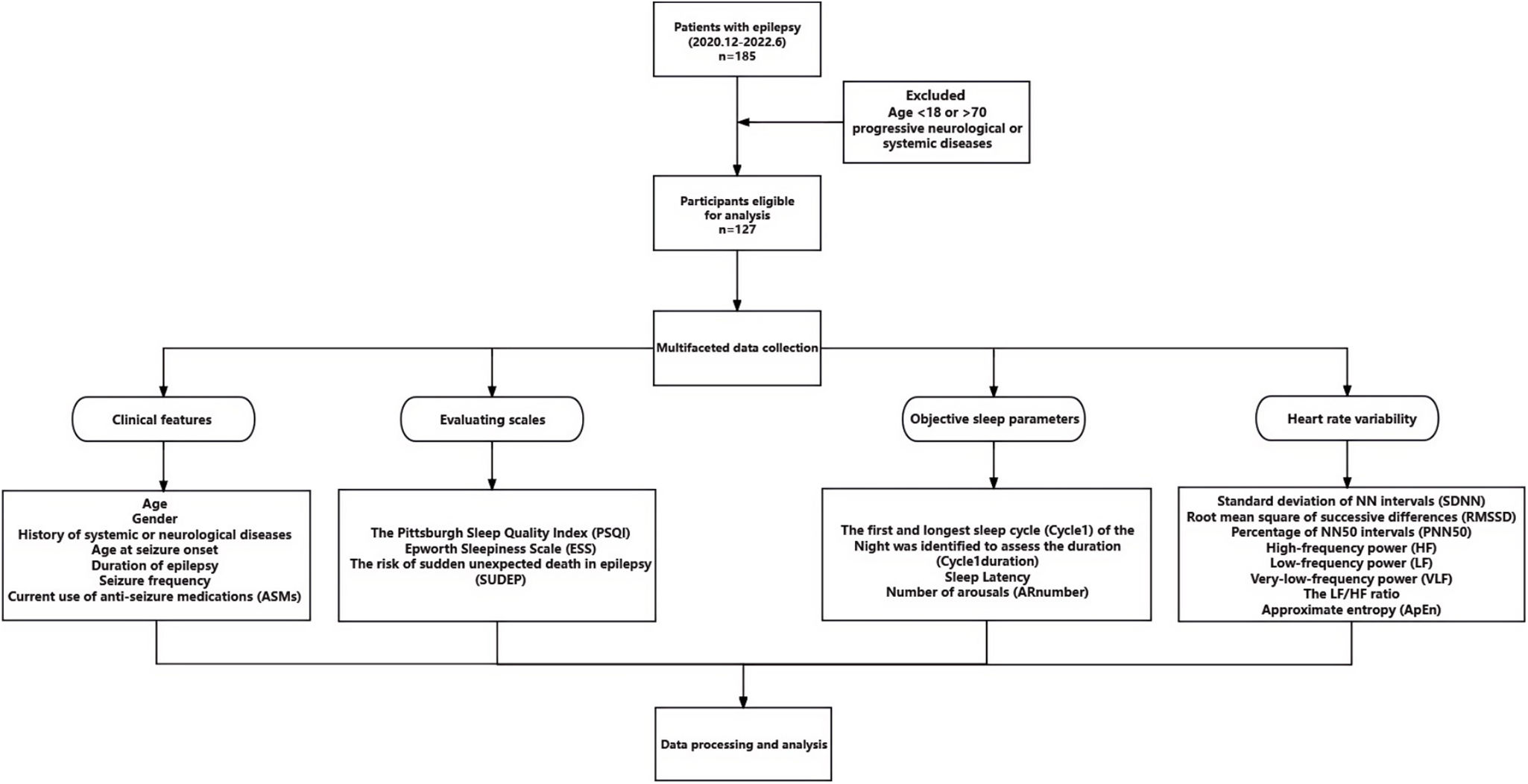
Patients with epilepsy undergoing overnight video-electroencephalographic monitoring were recruited between December 2020 and June 2022. Seizure-related characteristics were collected. Subjective and objective sleep quality were assessed using the Pittsburgh Sleep Quality Index (PSQI), Epworth Sleepiness Scale (ESS), duration of the first and longest cycle of the whole night’s sleep (cycle 1 duration), sleep latency, and number of arousals from lights-off to the start of cycle 1 (AR number). Autonomic function was evaluated using HRV parameters, including root mean square of successive differences (RMSSD) and the percentage of NN50 intervals (PNN50), during non-rapid eye movement (NREM) sleep stages 2 and 3. The risk of SUDEP was measured using the 7-item SUDEP inventory (SUDEP-7).
Results
A total of 127 patients with epilepsy were included in the study. Patients with a cycle 1 duration of less than 60min had significantly higher PSQI scores (t test, P<.05) compared to those with a cycle 1 duration of 60min or more, consistent with poorer subjective sleep quality. Daytime dysfunction (reflected in the 7th domain of the PSQI) and RMSSD and PNN50 during NREM sleep stage 3 (one of the HRV time domain parameters) were both independent risk factors for SUDEP. Although no positive mediation effect of HRV on daytime dysfunction and SUDEP risk was observed, an inverse relationship between RMSSD during NREM stage 3 and both outcomes was identified.
Conclusion
Patients with epilepsy (and especially those with generalised tonic–clonic seizures) exhibiting daytime dysfunction should be prioritised for SUDEP risk screening. Further research should explore additional factors beyond HRV and potential interventions targeting sleep and autonomic function in patients with epilepsy.