Background
Non-alcoholic fatty liver disease (NAFLD) is one of the most frequent causes of liver disease in our region, with a strong association with metabolic factors, such as obesity and diabetes. Recent studies reported that NAFLD was 1.5–3 times more common in psoriatic patients.
Objectives
To calculate the diagnostic validity parameters of the triglyceride/glucose (TyG) index, and its combination with anthropometric parameters [body mass index (BMI), waist circumference (WC), and waist-to-height ratio (WHR)], as a non-invasive method for detecting NAFLD in patients with moderate-to-severe psoriasis.
Methods
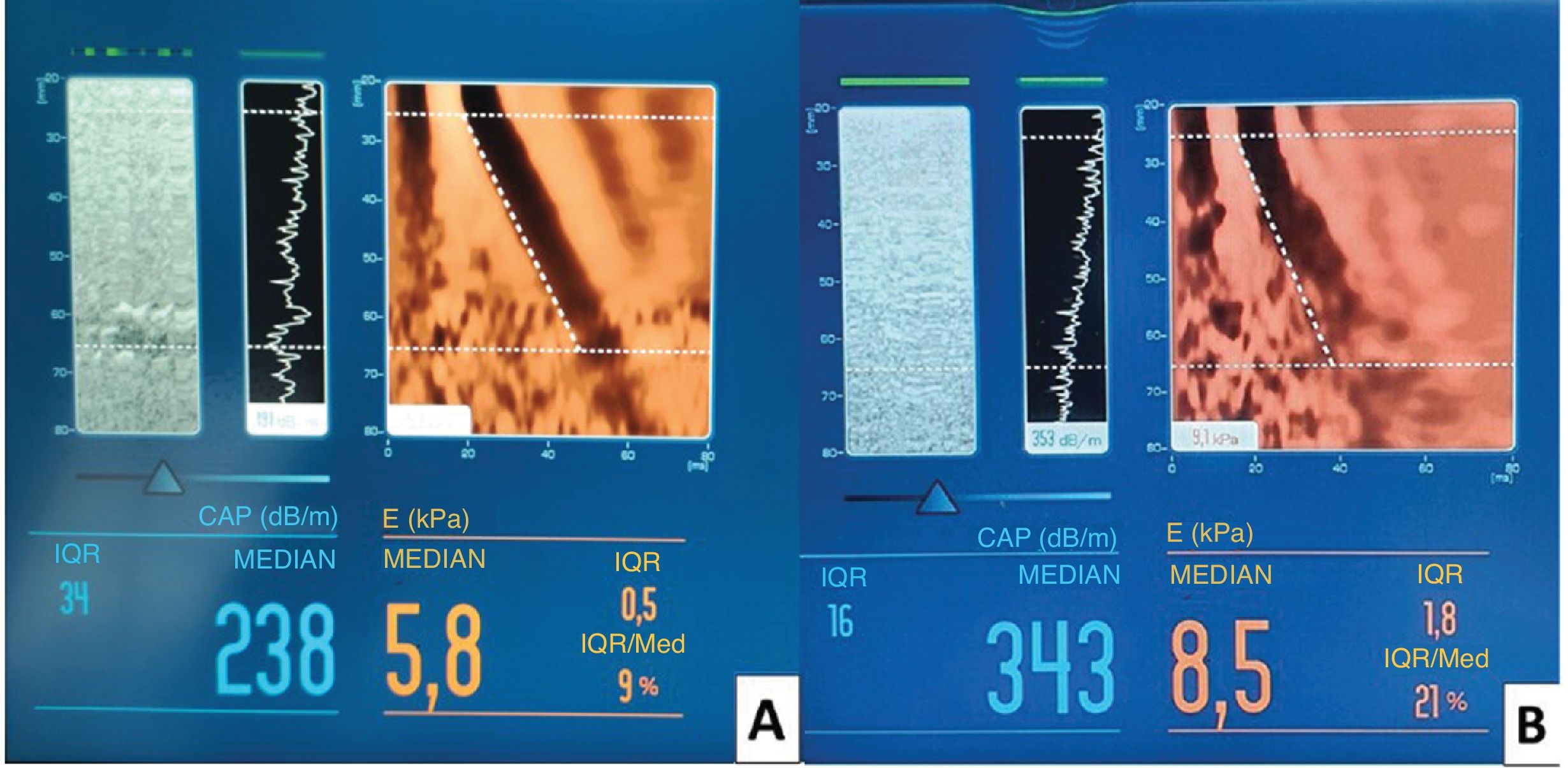
We conducted a cross-sectional and single-center study with 149 patients with moderate-to-severe psoriasis. The ROC curves and the area under the curve (AUC) were calculated for the TyG index along with different anthropometric measures, using transient elastography as the reference test. The optimal cut-off point was calculated using Youden's index.
Results
The prevalence of NAFLD was 64%. A total of 18% of these patients had significant liver fibrosis. The TyG index with anthropometric parameters showed a significant association with liver steatosis (P<.001). The TyG-BMI, TyG-WC, and TyG-WHR indices all showed an AUC>.83, while the TyG-BMI showed the highest AUC (0.852). Results were consistent in sex-based analyses.
Conclusions
The TyG index with anthropometric parameters—especially BMI—is an effective method for the initial screening of NAFLD in psoriatic patients.