Objective
To evaluate the effectiveness of structured coaching interventions on anxiety, depression, emotional intelligence, and quality of life in adults with anxiety and/or depressive disorders in Primary Care.
Design
Pilot randomized, controlled, open-label clinical trial.
Site
San Gregorio Health Center, Telde (Gran Canaria, Spain), Primary Care setting.
Participants
Thirty adults aged 18–65 years with anxiety and/or depressive disorders were randomized (1:1:1) to control, face-to-face coaching, or telephone coaching.
Interventions
Five weekly structured coaching sessions based on the GROW model were delivered face-to-face or by telephone. The control group received usual care.
Main measurements
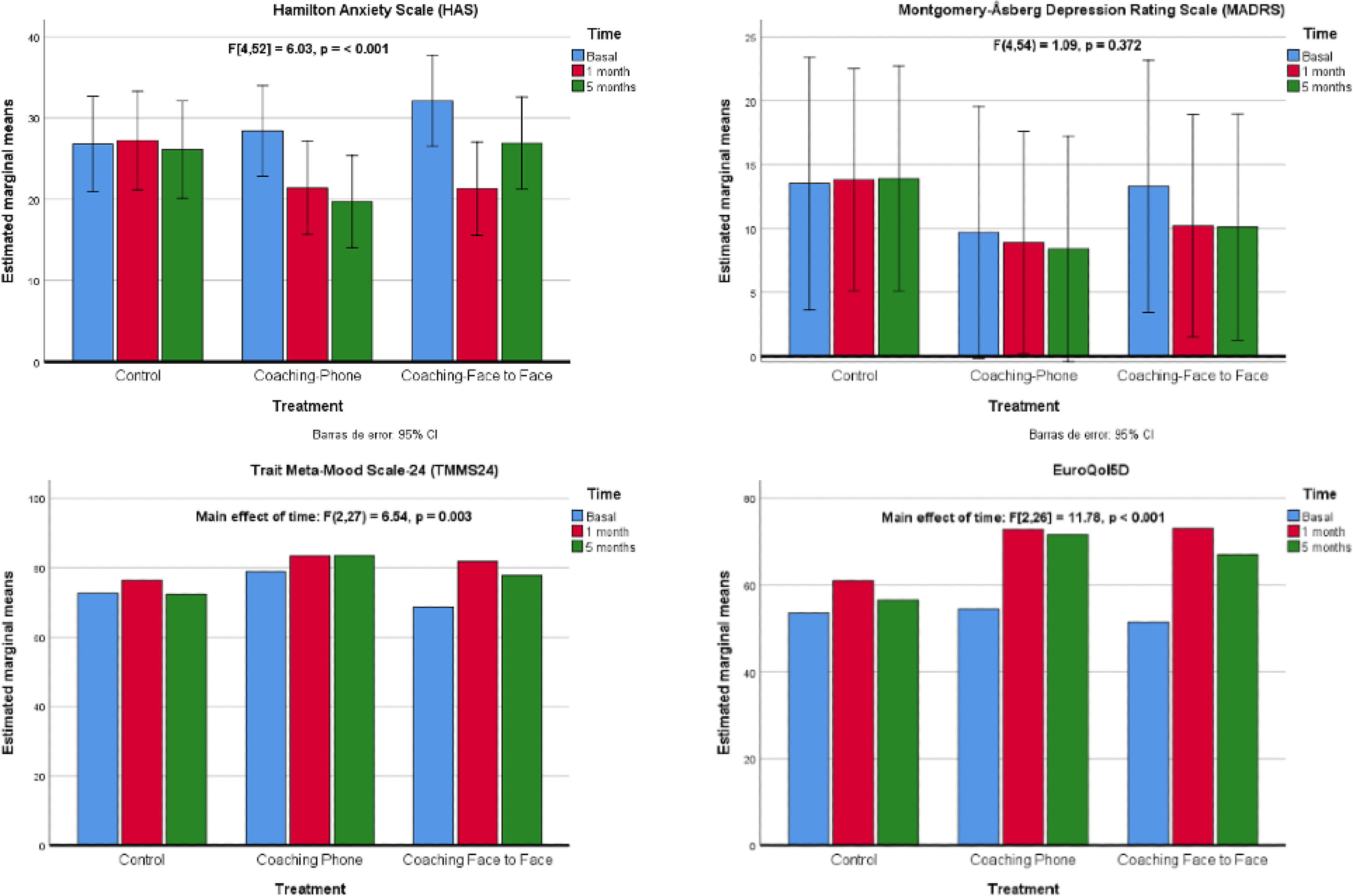
Primary outcomes were anxiety (Hamilton Anxiety Scale, HAS) and depression (Montgomery–Åsberg Depression Rating Scale, MADRS). Secondary outcomes included emotional intelligence (Trait Meta-Mood Scale-24) and quality of life (EuroQol-5D), assessed at baseline, one month, and five months.
Results
A significant time×treatment interaction was observed for anxiety (p<0.001). Both coaching modalities achieved greater reductions than control at one month (p=0.002) and five months (p=0.019). Face-to-face coaching showed a stronger short-term effect, whereas telephone coaching demonstrated more sustained improvement. No significant effects were found for depressive symptoms. Emotional regulation improved at one month in the face-to-face group (p=0.013) but was not sustained. Quality of life improved over time without between-group differences.
Conclusions
Structured coaching was associated with reduced anxiety symptoms in Primary Care. These findings should be interpreted cautiously and support the feasibility of larger trials.