Introduction
The efficacy and safety of alemtuzumab for patients with relapsing–remitting multiple sclerosis (RRMS) have been demonstrated in clinical trials. However, due to the limitations of these studies, it is important to assess the effects of the drug in clinical practice. The purpose of this study is to describe the effectiveness of alemtuzumab in terms of the number of relapses per year in patients with RRMS in the clinical setting. As secondary objectives, we evaluated its impact on disability and neuroimaging findings, as well as its tolerability and safety following administration.
Methods
We conducted a retrospective, multi-centre, open-label study by reviewing the clinical records of patients receiving alemtuzumab for RRMS treatment.
Results
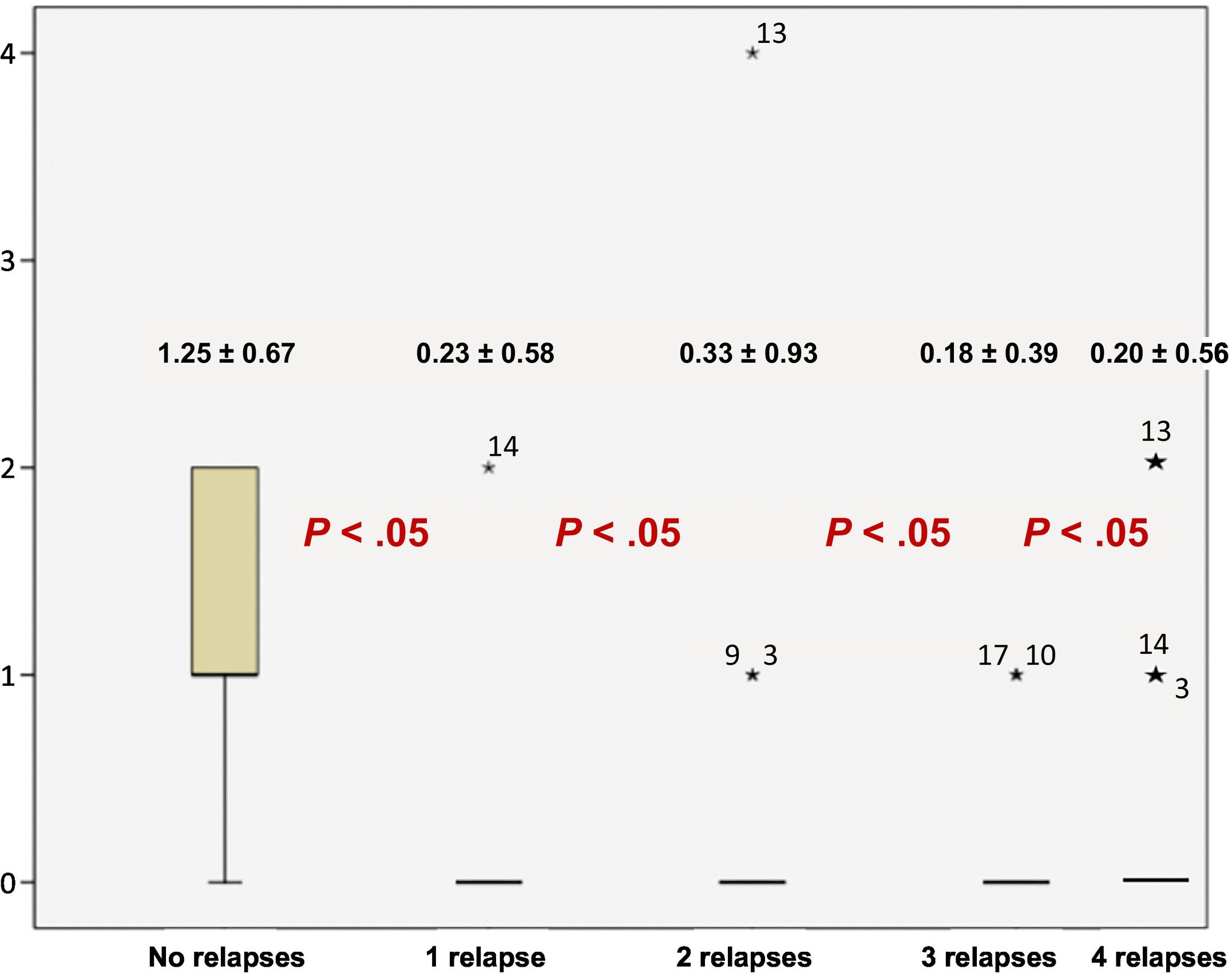
A total of 32 patients were included at the beginning of the 4-year follow-up period. The mean number of relapses per year remained below 0.35 during follow-up, compared to 1.25 per year before treatment. Disability, as measured with the Expanded Disability Status Scale, improved during the first 2 years, and remained stable thereafter. Neuroimaging revealed a decrease in disease activity. The most frequent adverse effects were infusion-related reactions and infections.
Conclusions
Alemtuzumab has been shown to be effective in clinical practice in reducing the number of relapses per year, improving disability and decreasing disease activity on brain MRI in patients with MS, with adequate tolerability and safety. However, prevention and monitoring strategies continue to be necessary.