
Introduction and objectives
Posterior reversible encephalopathy syndrome (PRES) is an endotheliopathy characterised by a spectrum of neurological symptoms in association with mainly bilateral, subcortical, parieto-occipital vasogenic oedema on neuroimaging. The aim of this study was to determine the incidence of PRES in our setting and to describe its causes and clinical and radiological features.
Materials and methods
We conducted a retrospective observational study of patients admitted to a stroke reference hospital with a diagnosis of PRES between January 2001 and December 2024.
Results
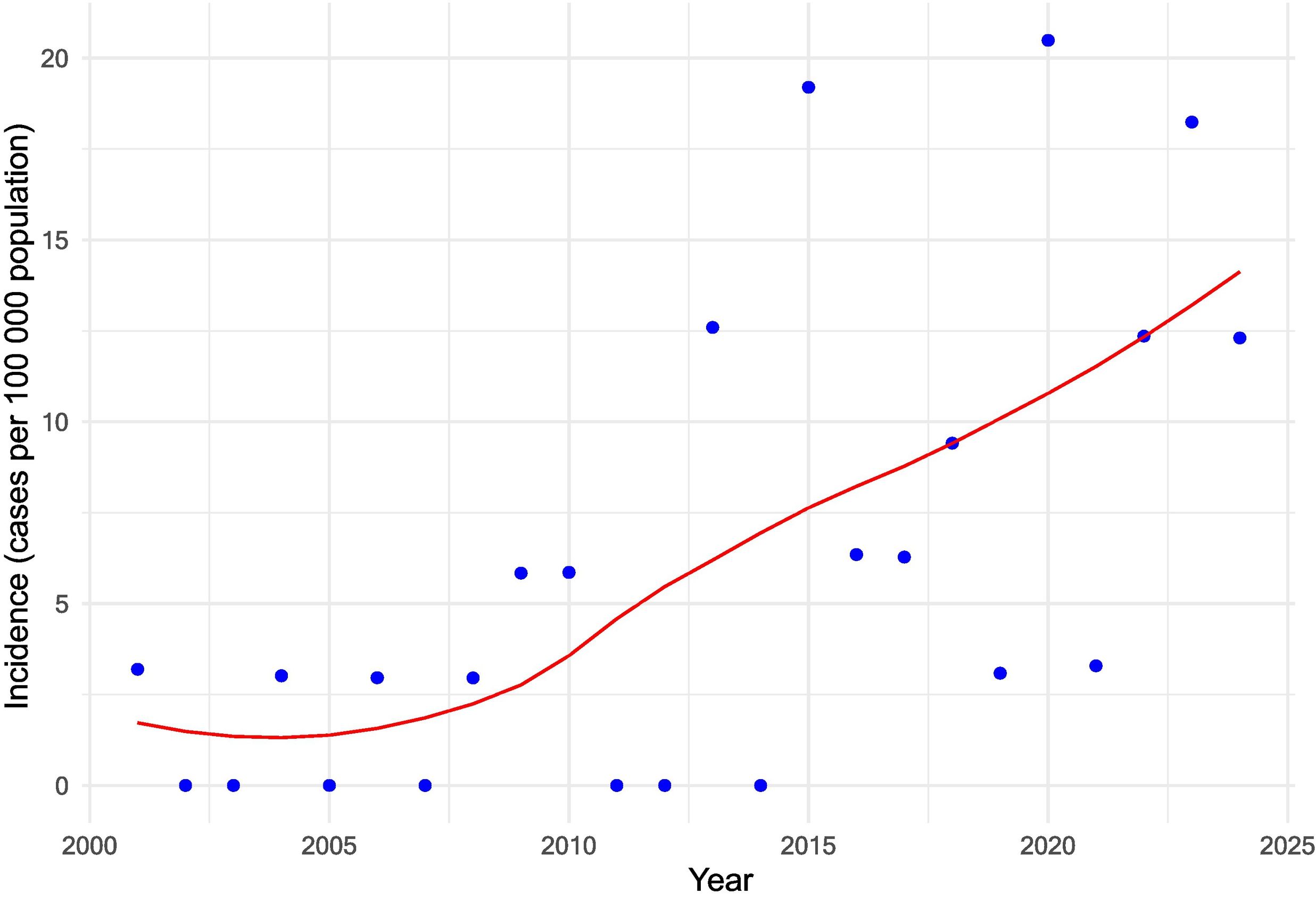
During the period analysed, 47 cases of PRES were recorded; 53.2% of patients were women, with a median age of 56 years (quartiles 1–3: 46–66.5). The mean annual incidence rate was 6.02 cases per 100,000 admitted patients, with an upward trend over the years (P = .0018).
In terms of aetiology, a pharmacological cause was found in 61.7% (n = 29), hypertensive crisis in 29.8% (n = 14), acute kidney failure in 29.8% (n = 14), and eclampsia in 4.3% (n = 2).
The syndrome manifested with altered level of consciousness in 61.7% (n = 29), seizures in 44.7% (n = 21), visual alterations in 31.9% (n = 15), headache in 29.8% (n = 14), aphasia in 29.8% (n = 14), and hemiparesis in 12.8% (n = 6).
Conclusions
The incidence of PRES is increasing. Diagnosis of PRES should be considered in patients with characteristic risk factors such as hypertension, treatment with immunosuppressive or cytotoxic agents, presenting with subacute neurological symptoms and with typical patterns of vasogenic oedema on brain MRI.


