Introduction
Lumbar puncture (LP) is a standard procedure in neurology units for the detection of Alzheimer disease and other neurodegenerative disorders. Several side effects associated with this procedure have been described, along with strategies to prevent them.
Methods
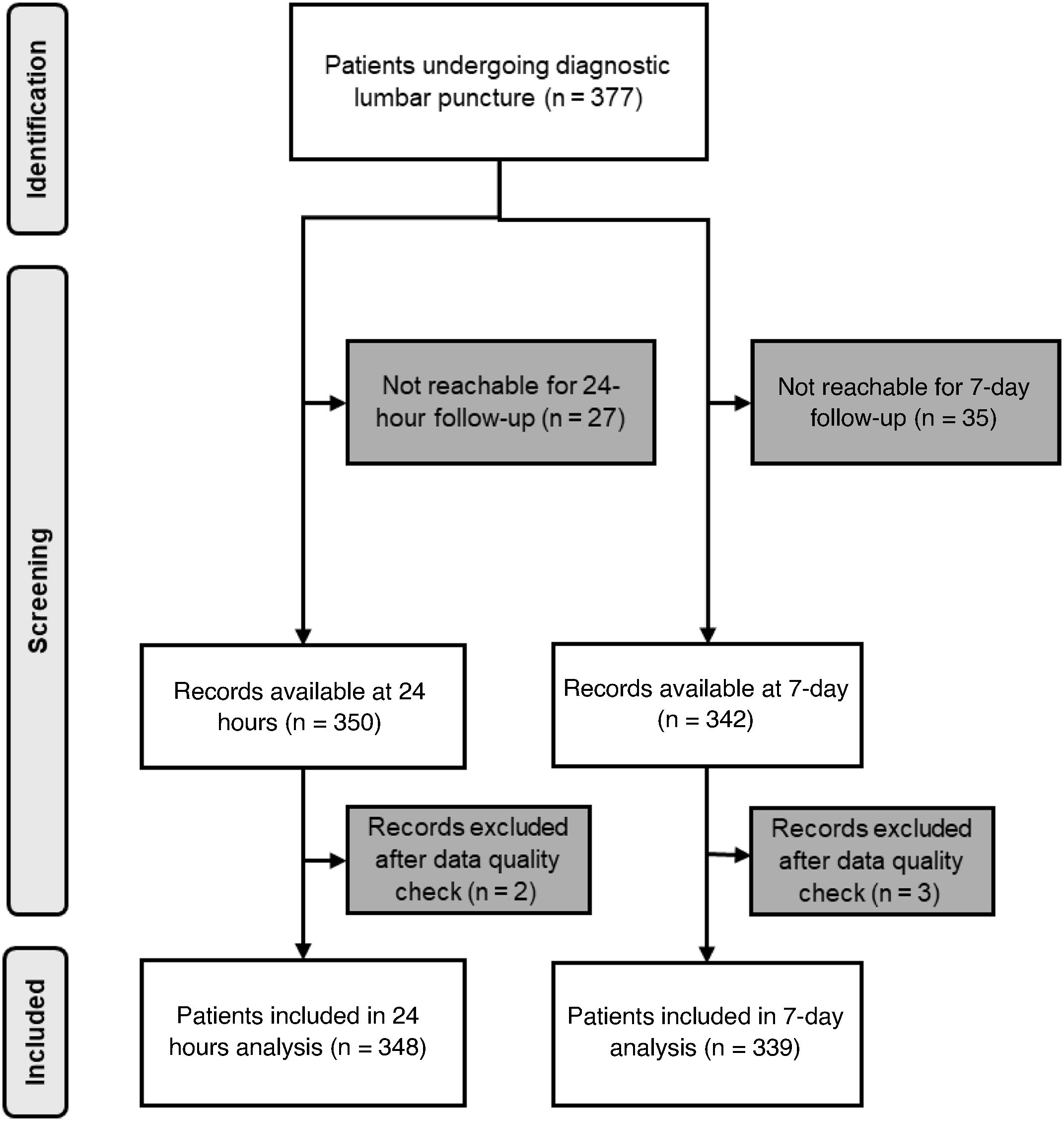
The data for this observational study were obtained by telephone (24h and 7 days after LP), using a structured interview, from patients who underwent a diagnostic LP for the evaluation of cognitive impairment (n=348). Participants were recruited from clinical practice, without comparison with other age groups or a non-LP control group.
Results
Some 31% of patients (108/348) reported headache 24h after LP, with duration up to 24h in 82%, and longer than 24h in 32.2% of those followed up at one week. After 7 days, 19% reported other types of pain or discomfort. In 16% of patients, these problems affected their daily activities, requiring interruption of the activity in more than 50% of cases. No relationship was observed between either the volume of water or the amount of caffeine consumed, and the percentage of patients with pain. Age was associated with higher headache incidence and greater intensity. However, in a multivariate model including baseline characteristics, no independent predictors of post-LP headache were identified. Similarly, patients with other complications were younger (median [IQR]: 67 [61–72] years) than those without other complications (P=.012). There were no sex differences in the presence/absence of headache. Weight, height, and BMI were not related to headache nor other self-reported complications.
Conclusion
Approximately one-third of patients at risk of dementia experienced post-LP complications, with headache being the most common. No baseline patient characteristics or commonly recommended modifiable factors reliably predicted these events. Younger age and certain CSF biomarkers showed weak associations with headache in univariate analyses but were not predictive in the multivariate analysis. Although post-LP complications cannot be robustly anticipated, careful monitoring and supportive care are recommended for all patients.