Psychotic symptoms and other neuropsychiatric manifestations in dementia are distressing conditions that deeply affect patients, carers, and staff. Low awareness and doubts about the competence of primary care services to intervene contribute to underdiagnosis and suboptimal management.
We critically discuss what may and may not be done in primary care, building on the case of a 79-year-old man with dementia who developed Capgras delusion (a typical misidentification syndrome), believing his wife was replaced by impostors. We highlight diagnostic and therapeutic challenges, discussing practical advice potentially applicable in many other neuropsychiatric conditions.
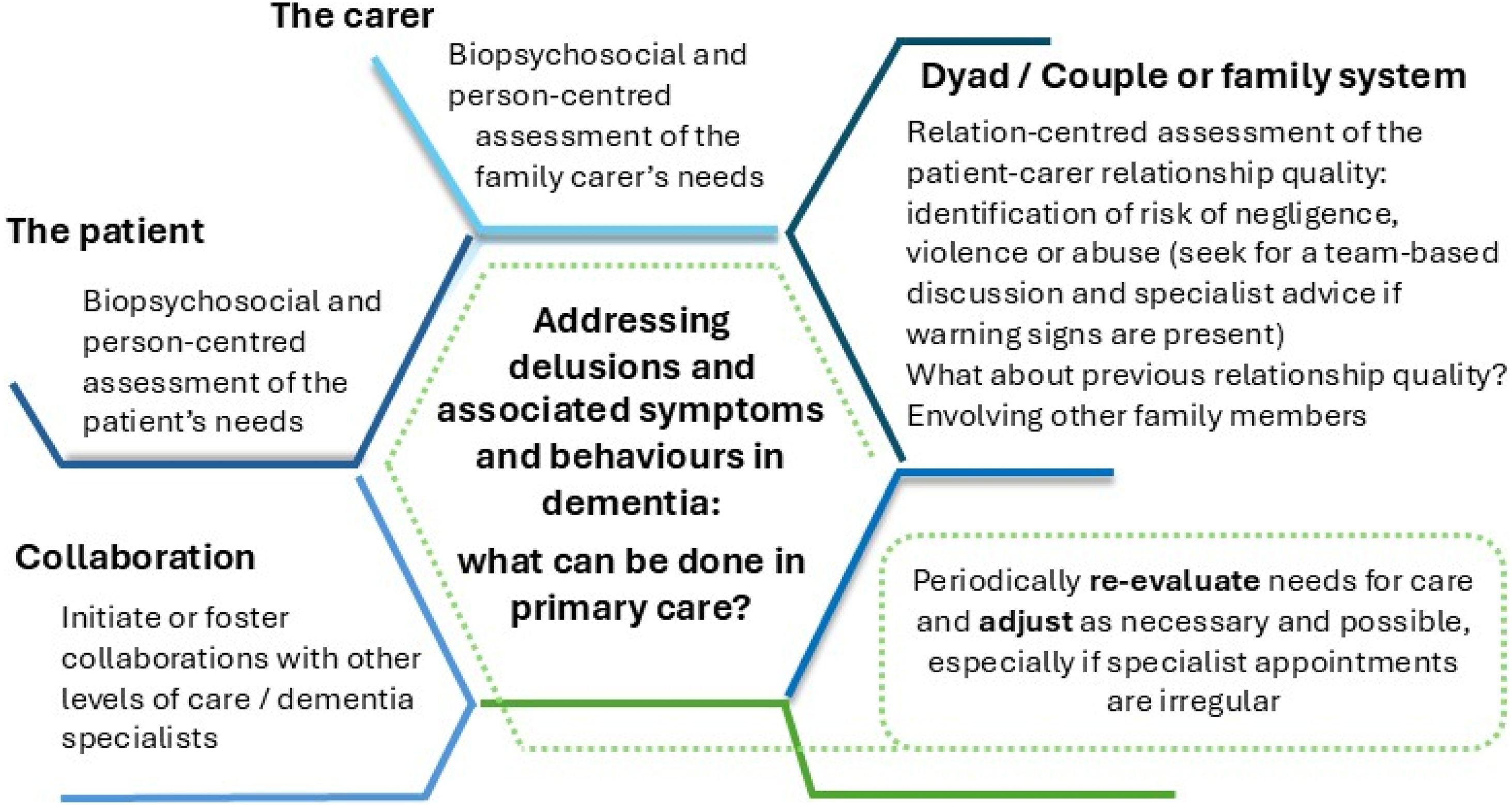
Referrals to specialists are needed but continuity of care and a family-sensitive practice remain crucial (this patient’s symptoms and his wife’s distress seemed to enhance each other in circular manners). Primary care is pivotal in relation-centred dementia management, to help address the biopsychosocial needs of patient and carers.
A multidisciplinary, task-sharing approach may improve dementia care, particularly in resource-limited settings.