Introduction
More than 7000 cases of cutaneous melanoma (CM) were diagnosed in Spain in 2023, and approximately 15% were stage II. Patients with stage IIB-C CM typically have lower survival rates than those with stage IIIB disease.
Objective
To describe recurrence patterns and variations in healthcare resource utilization (HCRU) at disease progression in Spanish patients with stage II primary CM.
Methods
This retrospective study included patients diagnosed with stage II CM (AJCC, 8th edition) between January 2013 and December 2017 at 11 Spanish hospitals. Disease characteristics, recurrence patterns, treatment after recurrence, survival outcomes, and HCRU were examined. Stages at diagnosis and time-to-event endpoints were also compared.
Results
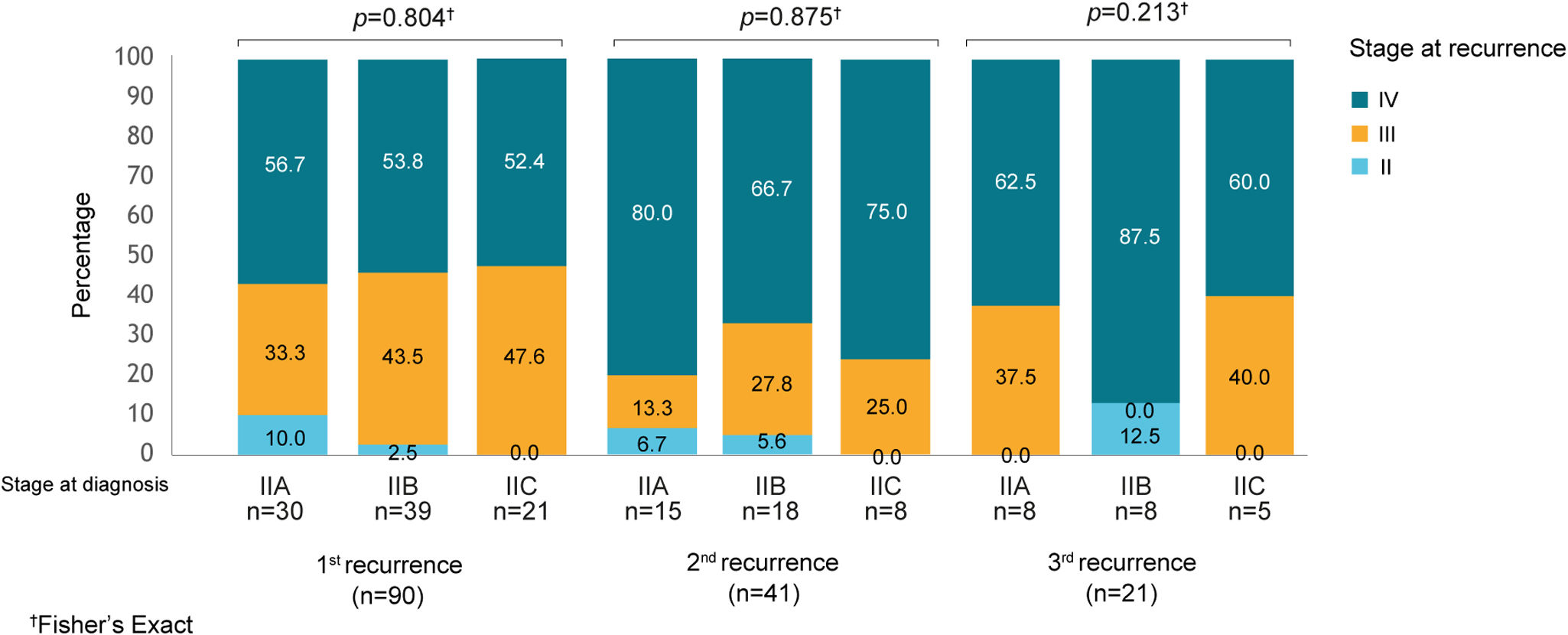
A total of 324 patients were included (52.2% male; median age, 64 years): 44.4% had stage IIA, 35.5% stage IIB, and 20.1% stage IIC disease. Ninety patients (27.8%) had at least 1 recurrence of CM; recurrence was lymphatic in 41.1%, hematogenous in 34.4%, and both in 20.0%. Most recurrent patients (54.4%) progressed to stage IV disease, mainly with lung metastases (70.1%). Eighty-one patients (90.0%) received treatment after recurrence: 58 (71.6%) received systemic treatment, 45 (55.6%) underwent surgery, and 25 (30.9%) received radiotherapy. Five-year recurrence-free survival was 74.5% for stage IIA, 62.6% for stage IIB, and 65.7% for stage IIC disease, with a significantly higher risk of recurrence in stages IIB/C versus IIA (HR, 1.52; 95%CI, 1.02–2.25; P=.039). After first recurrence, annual HCRU rates increased by 251%, with annual cost increases of €3018.68 for visits and €9428.73 for tests.
Conclusions
A substantial proportion of patients with stage II melanoma experience recurrence, often with distant metastases and a marked impact on healthcare resource utilization. These findings reinforce the need to optimize follow-up and advance adjuvant strategies.