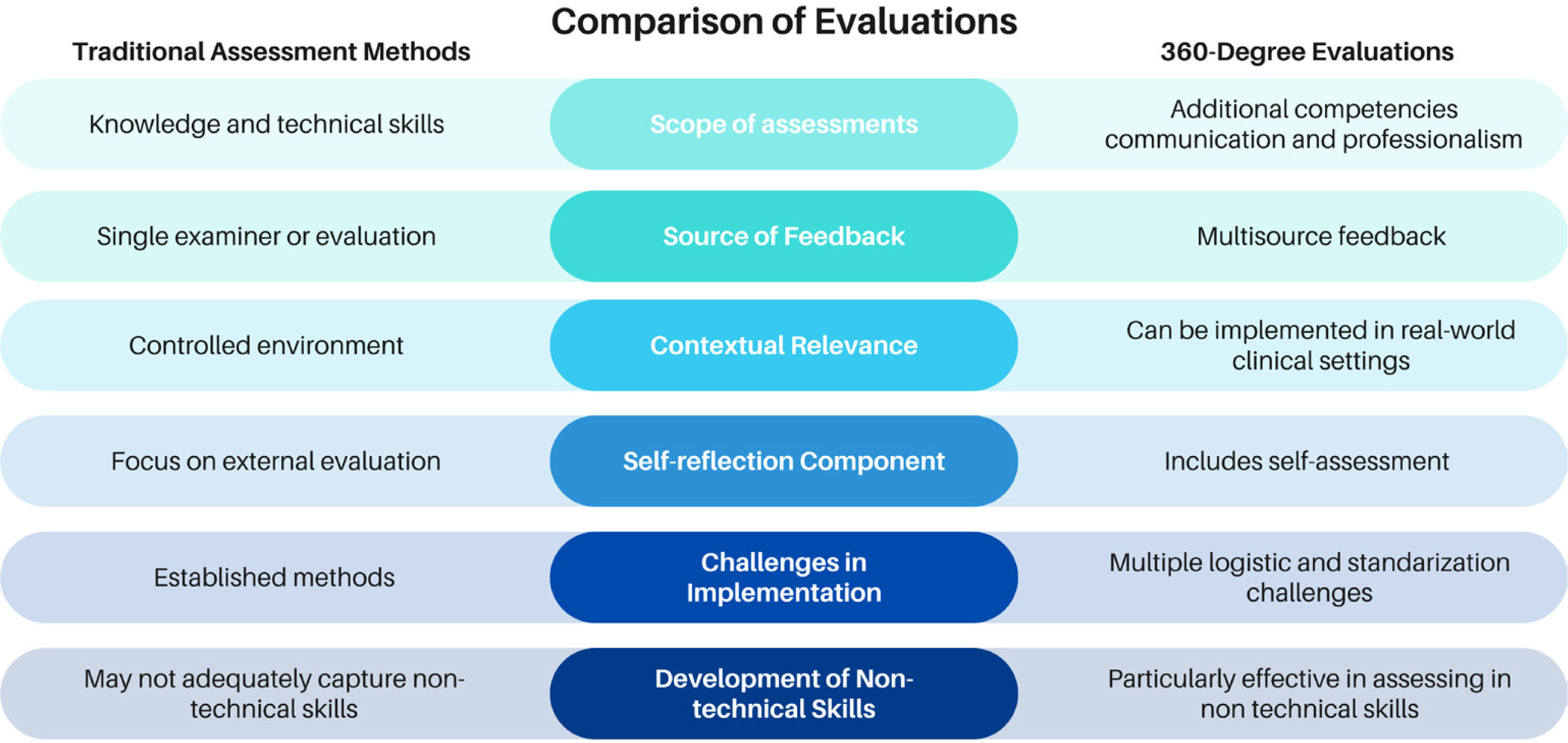
The training of medical residents requires educational strategies that foster the comprehensive development of clinical, communication, and professional competencies. In this context, 360-degree evaluations have emerged as an alternative to traditional assessment methods, enabling a more comprehensive appraisal of performance. This narrative review aimed to analyze their implementation, effectiveness, challenges, and long-term outcomes in medical education. A comprehensive literature search was conducted using terms related to “360-degree evaluation,” “multisource feedback,” and “health education,” identifying 34 studies across diverse training settings.
Findings indicate that 360-degree evaluations provide a holistic perspective by integrating feedback from multiple sources, including peers, supervisors, patients, and self-assessment. Their use is associated with improvements in clinical competencies, communication skills, professionalism, and overall performance. Additionally, continuous feedback promotes reflective practice and sustained professional development, contributing to improved quality of care and patient satisfaction.
However, several challenges were identified, including evaluator bias, logistical complexities, and difficulties in effectively integrating feedback into training programs. Successful implementation strategies include structured evaluator training, the use of standardized tools, regular feedback sessions, and strong institutional support supported by appropriate technological platforms.
In conclusion, 360-degree evaluations represent a valuable complement to traditional assessment methods by providing a multidimensional view of resident performance. Careful implementation can maximize their benefits and contribute to both professional development and the quality of healthcare delivery.