
Introduction
Myasthenia gravis (MG) is an autoimmune disease affecting the neuromuscular junction. Given the increase observed in its incidence in recent decades, especially in older ages, understanding its characteristics is crucial to improving its diagnosis and treatment. We describe the characteristics of a group of patients with very late-onset MG (vLOMG; onset after >65 years of age) at a secondary hospital and present a review of the literature.
Methods
We conducted a single-centre study with retrospective analysis of the characteristics of patients with vLOMG who attended from January 2010 to August 2023. Data from 28 patients were collected, including demographic variables, diagnosis, treatment, and progression. A descriptive analysis of the data was performed.
Results
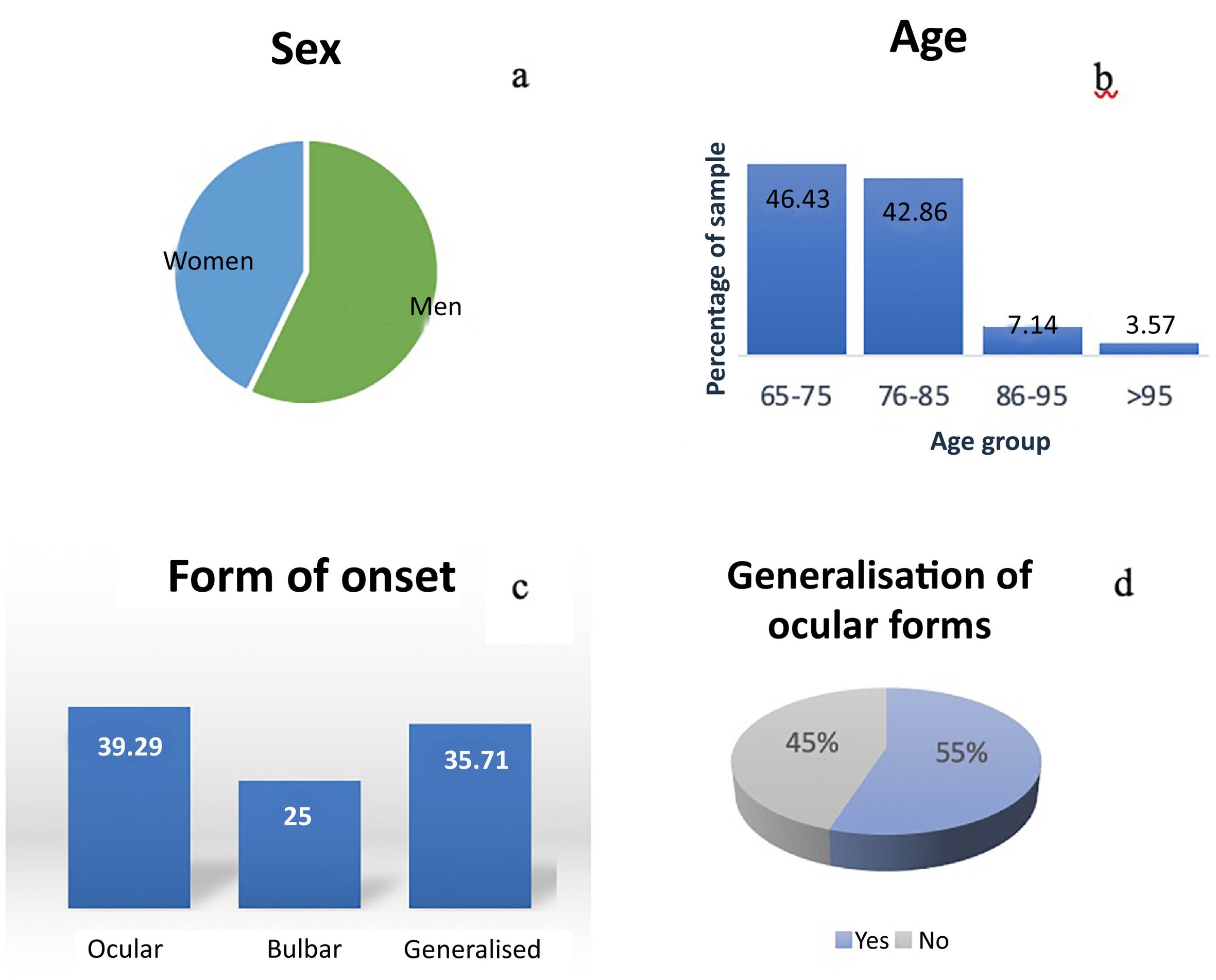
We observed a male predominance, a high rate of positivity for anti-acetylcholine receptor antibodies, ocular forms at clinical onset with frequent generalisation, and a low incidence of thymomas. Our sample also presented a high frequency of exacerbations or crises, which were generally not severe, with none leading to patient death. The vast majority achieved minimal manifestations status with the first immunosuppressive treatment, and no refractory cases were recorded. Interestingly, a quarter of patients displayed a temporal relationship between MG onset or exacerbation and diagnosis of neoplasms or tumour progression, especially involving the genitourinary tract.
Conclusions
Our patients with vLOMG present clinical characteristics similar to those described in the literature. Notably, in our series, we observed a frequent association with tumours or tumour progression. Larger studies are needed to confirm these findings.