Background
Multiple studies have corroborated the association between bullous pemphigoid (BP) and neurological diseases; patients with both diseases (BP-N) have been associated with a worse prognosis and specific clinical and immunological characteristics, defining a different subtype of BP.
Objectives
We aimed to determine the prevalence and characteristics of BP cases with neurological comorbidities (BP-N) and review the related published literature.
Methods
We conducted a retrospective, observational study of BP cases treated at a referral center for autoimmune blistering diseases from January 2000 through June 2020.
Results
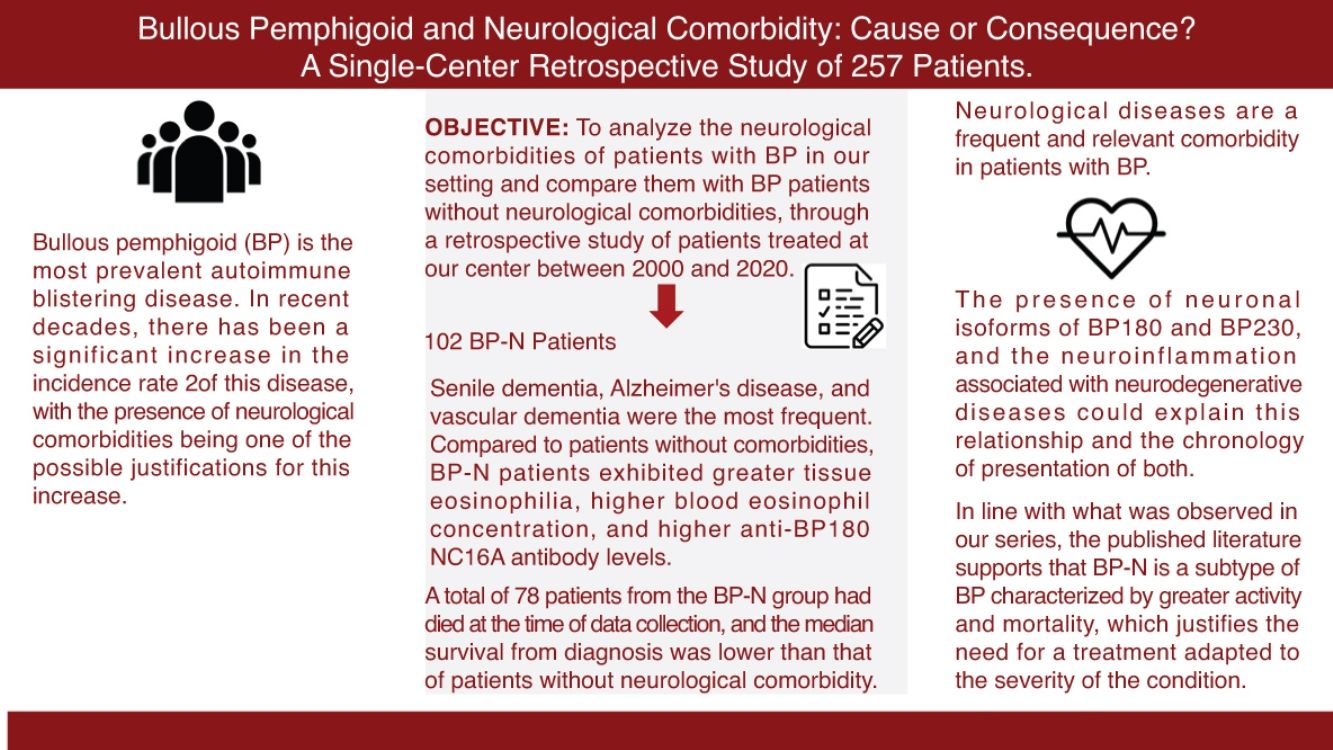
We collected epidemiological, clinical, histopathological, progression and laboratory data from a total of 257 cases, 102 of which were BP-N. Senile dementia, Alzheimer's disease and vascular dementia were the most frequent neurological comorbidities. Compared with cases without neurological comorbidities, BP-N cases had more intense tissue eosinophilia (p=0.012) and higher concentrations of circulating eosinophils (p=0.000), and anti-BP180 IgG antibodies (p=0.007). At the time of data collection, 78 BP-N were deceased.
Conclusions
Our case series highlighted the relevance of neurological comorbidities in BP patients; although the pathogenesis is still to be elucidated, the neuroinflammation present in neurodegenerative diseases could explain the neurocutaneous link and the chronological relationship between these entities.