Objectives
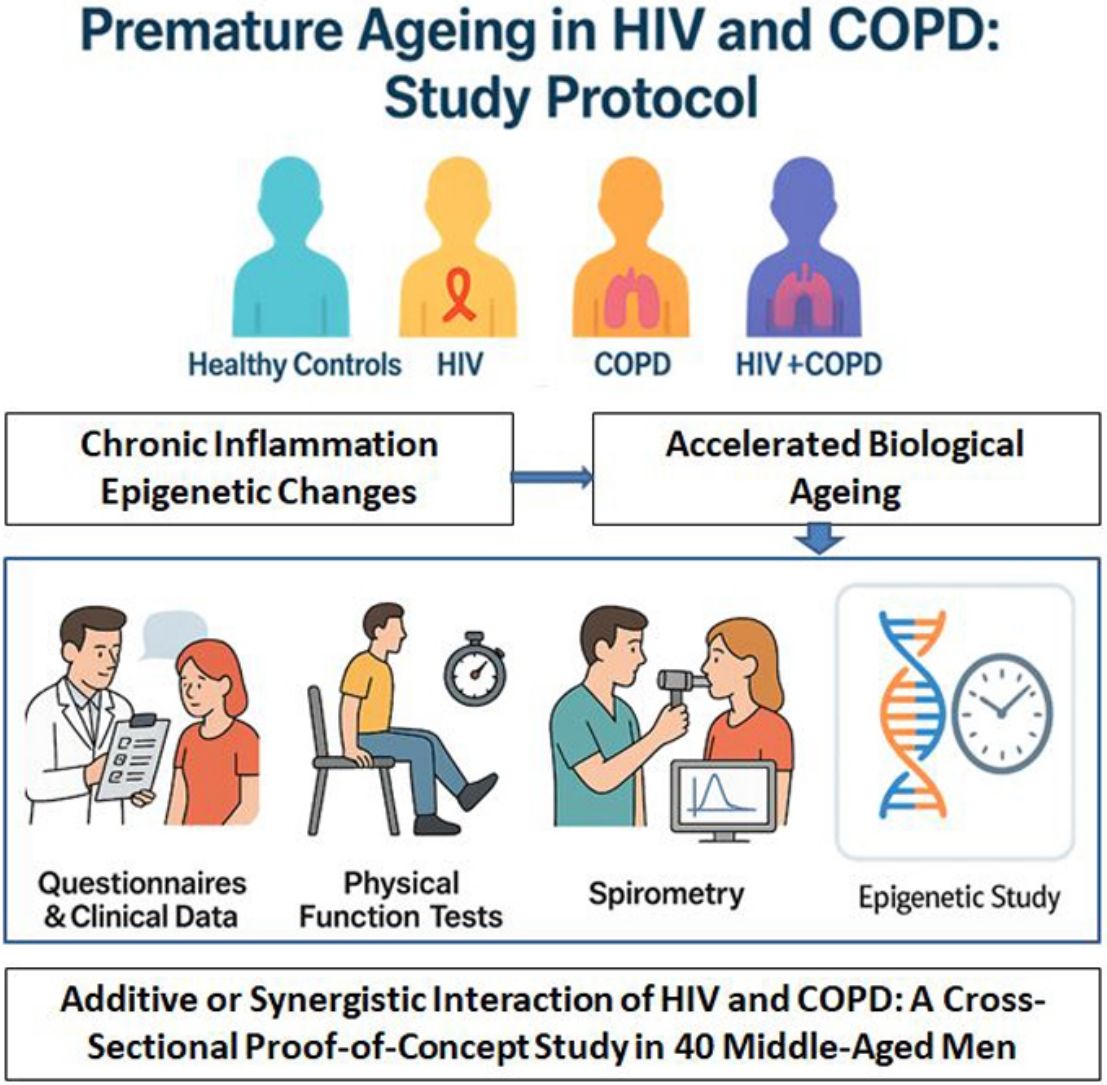
Our project aims to study premature ageing in people living with HIV and COPD. We hypothesize that the chronic inflammation associated with both conditions accelerates the ageing process. HIV infection has undergone a significant paradigm shift in recent years, transitioning from a rapidly fatal disease to a chronic condition. People living with HIV experience more comorbidities (cardiovascular events, osteoporosis, cancer, neurodegenerative diseases, …) at a younger age. This phenomenon, often referred to as ‘premature ageing,’ is associated with chronic inflammation and epigenetic changes. Epigenetic clocks, composite markers based on DNA methylation alterations, have emerged as valuable tools for predicting biological age as they predict mortality better than chronological age. These alterations are described both systemically and at the pulmonary level and are related to a higher prevalence of chronic obstructive pulmonary disease (COPD) and worsened respiratory function.
Material and methods
To achieve this, we will perform a case–control study analysing epigenetic clocks and comparing four different groups: healthy control subjects, patients living with HIV without COPD, COPD patients without HIV, and patients with both HIV and COPD.
Conclusions
We hypothesise that patients with both COPD and HIV will exceed the cumulative ageing effect of each condition separately, which suggests a multiplicative effect of ageing between HIV and COPD. Should our hypothesis be supported, it could justify a re-evaluation and potential modification of current screening protocols for COPD in HIV patients or the implementation of case-finding strategies.