
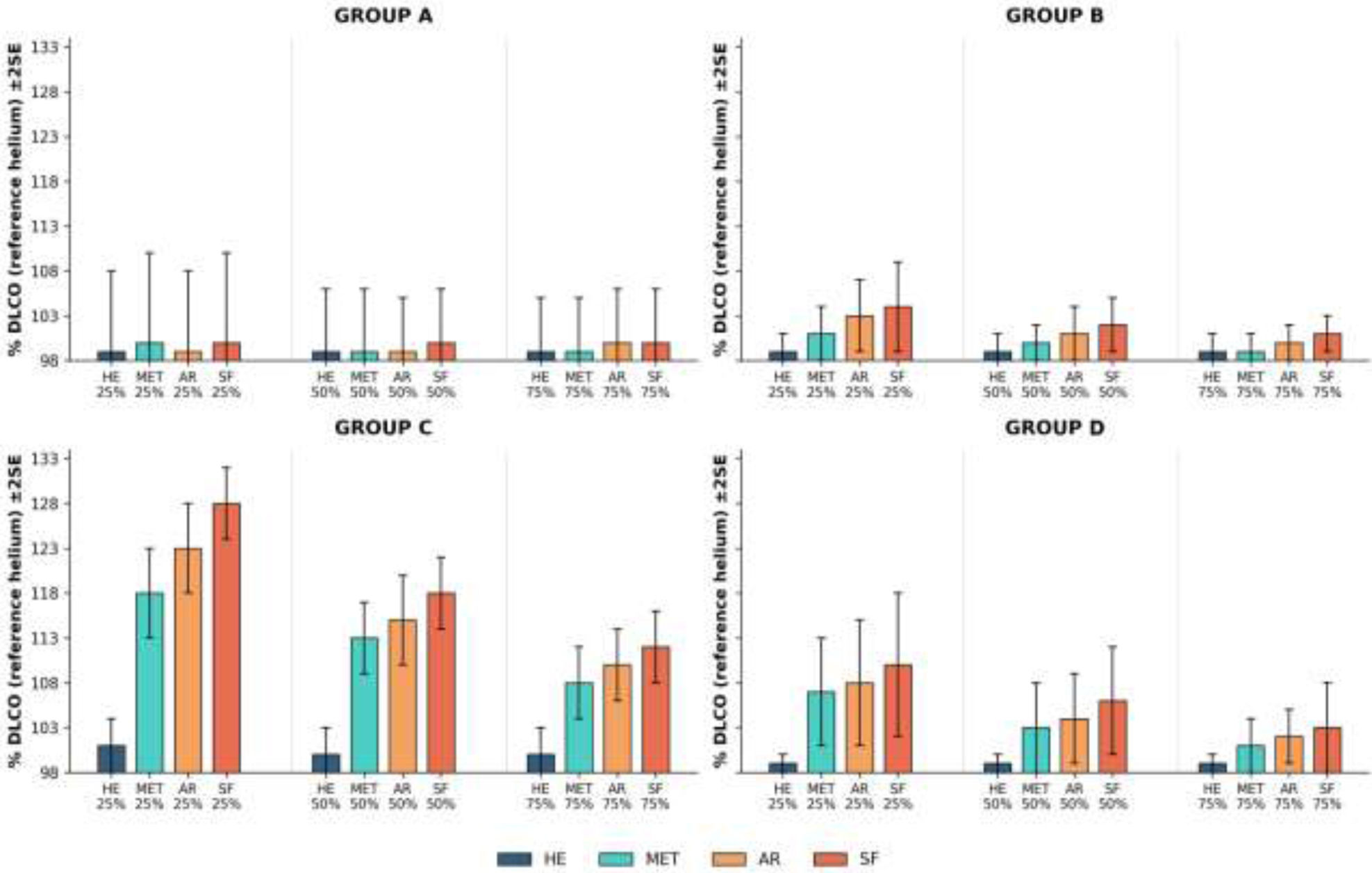
Measurement of the lung diffusing capacity for carbon monoxide (DLCO) requires an inert tracer gas—traditionally helium (He)—to estimate alveolar volume (VA). However, alternative gases such as argon (Ar), sulfur hexafluoride (SF6), and methane (CH4) differ markedly in diffusivity and molecular weight, potentially influencing results. This physiological pilot study evaluated 27 subjects (healthy subjects; airflow obstruction pattern with preserved DLCO; emphysema and finally patients exhibiting a combined obstructive–restrictive ventilatory pattern, consistent with combined pulmonary fibrosis and emphysema (CPFE) or interstitial lung disease (ILD) with concomitant airflow limitation.) using a multigas DLCO mixture. Measurements were obtained with a Cosmed Quark PFT 4 system and mass spectrometry, analyzing gas concentrations at 25%, 50%, and 75% of expiration to assess ventilation distribution.
Differences in tracer gas diffusivity influence VA estimation and DLCO in diseased lungs (maximum group mean difference +26.7%, found in emphysema group, SF6 vs He), while healthy subjects were unaffected. Standardization of tracer gas use would improve inter-laboratory comparability. When not feasible, sampling later in expiration may reduce variability, pending prospective validation.