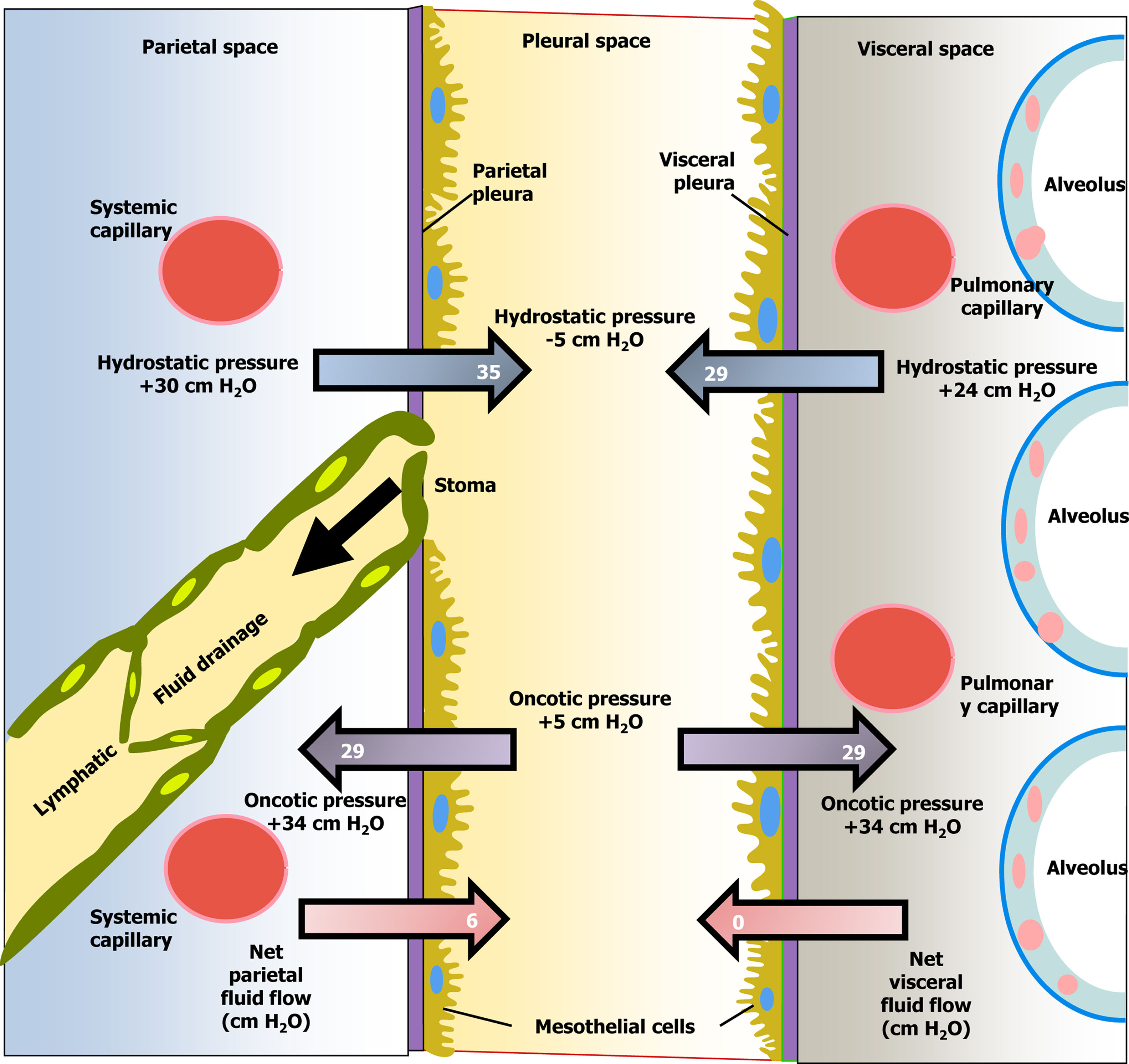
Under normal conditions, there is a small volume of fluid in the pleural space as a result of the balance between its inflow from the pleural capillaries and its drainage through the lymphatics. Pleural effusion (PE) will occur when this balance is disturbed. The initial step in its study is to determine whether PE it is a transudate or an exudate. The first is caused by an alteration in the hydrostatic or oncotic pressure of both the pleural capillaries and the pleural space, without any structural damage to the pleura and with a simple differential diagnosis. In the second, there will be an alteration in fluid flow (increased inflow due to increased permeability of the pleural capillaries or decreased reabsorption due to blocked lymphatic drainage) with damage to the pleural surfaces. Diagnosis is more difficult and more complex biochemical determinations are often used to determine the etiology. A careful clinical history and physical examination together with a good knowledge of the movement of pleural fluid and the information provided by its analysis, obtained by thoracentesis, a simple and safe technique, would allow the family physicians to establish the presumptive diagnosis of the etiology of pleural effusion in about 95% of cases. In this review we provide guidelines as to which specific markers may be useful in the diagnosis of pleural effusion in the Primary Care setting.