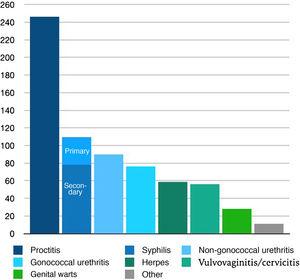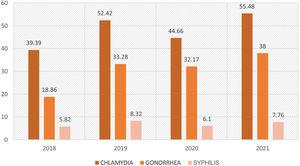
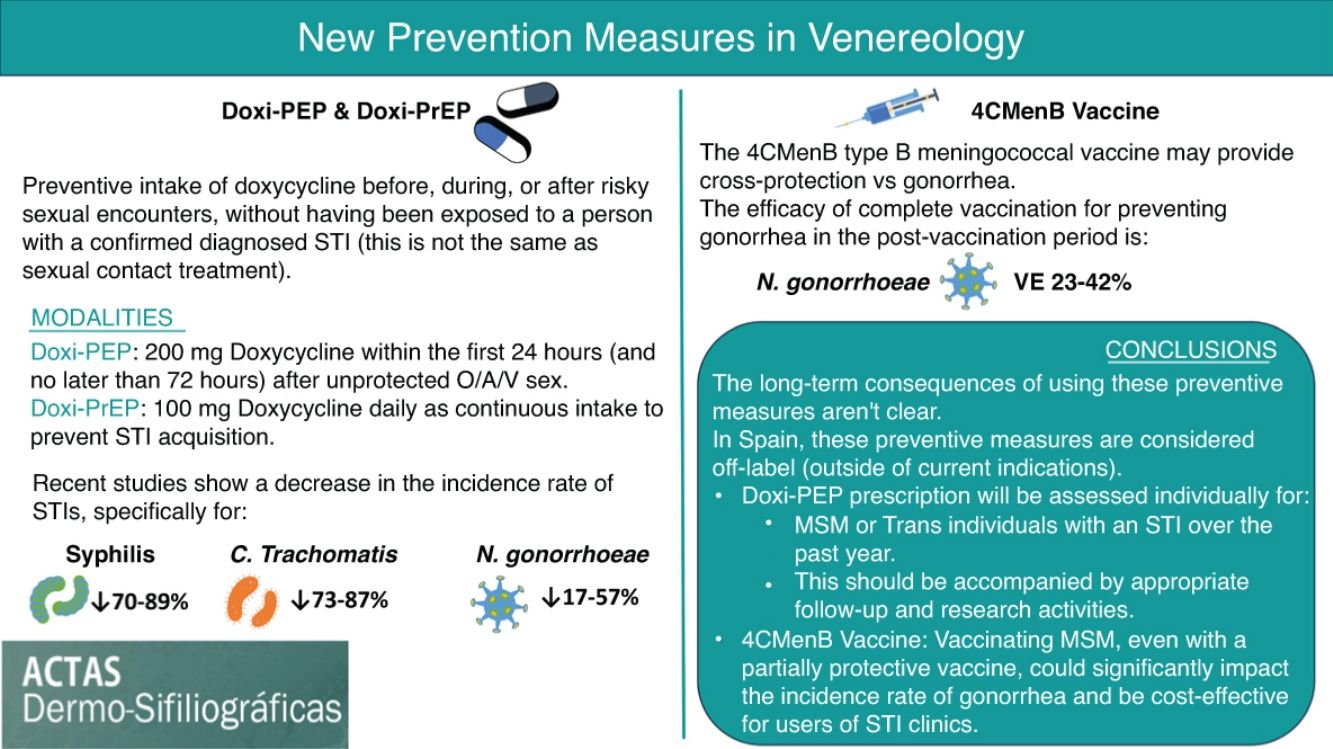
Sexually transmitted infections (STIs) are increasing in Spain. The traditional strategy for STI control is mainly based on screening and treatment of STIs in patients with risky sexual practices. In recent years, new interesting primary and secondary prevention strategies are being studied to reduce the incidence rate of STIs in high-risk populations. The most interesting one, based on the evidence obtained, is the use of doxycycline and meningococcal B vaccines. Specialists in dermatology and venereology must be informed about these new developments that may have an impact on the way in which STIs are managed worldwide. This is a scientific evidence review of these new interesting primary and secondary prevention strategies to control STIs in a high-risk population.