Introduction
Atopic dermatitis (AD) represents a significant burden for both patients and the health care system. The objective of this study was to describe resource utilization in patients with AD according to the level of disease control.
Material and methods
Multicenter, observational, prospective cohort study (BIOBADATOP). Sociodemographic characteristics and disease severity variables were included. According to disease control after 12 months of follow-up, patients were classified as optimally controlled, moderately controlled, or uncontrolled. In addition, information on health care resource utilization was collected.
Results
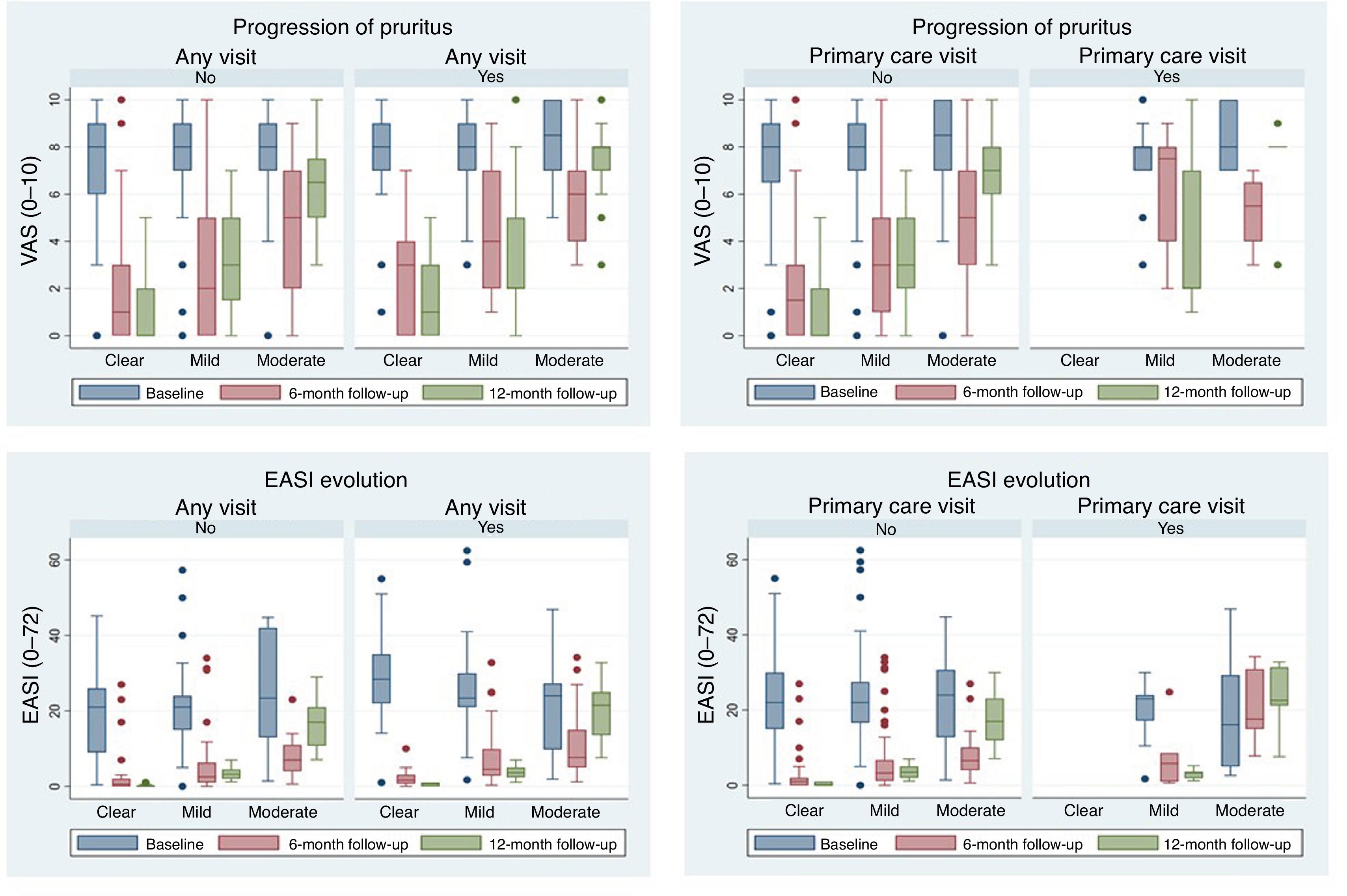
A total of 211 patients were included. At the 12-month follow-up, a total of 35.5% achieved optimal control, 46.0% moderate control, and 18.5% continued to have uncontrolled disease. Shorter AD duration, lower baseline POEM, and baseline initiation with a biologic or JAK inhibitor (JAKi) were associated with better disease control. A total of 42.7% of patients required some type of additional health care assistance during follow-up. Uncontrolled patients showed a higher tendency for health care visits vs moderately controlled and optimally controlled patients (2.13 vs 1.71 vs 0.80, P=.084).
Conclusion
Health care resource utilization in patients with AD varies according to the level of disease control. Factors associated with better control included shorter disease duration, initial treatment with biologics or JAK inhibitors from baseline, and lower baseline POEM.