Objective
To evaluate the effectiveness of community-based physical activity models in improving the physical, psychological, and social dimensions of quality of life (QoL) among community-dwelling older adults aged 60 years and above.
Design
Systematic review.
Data sources
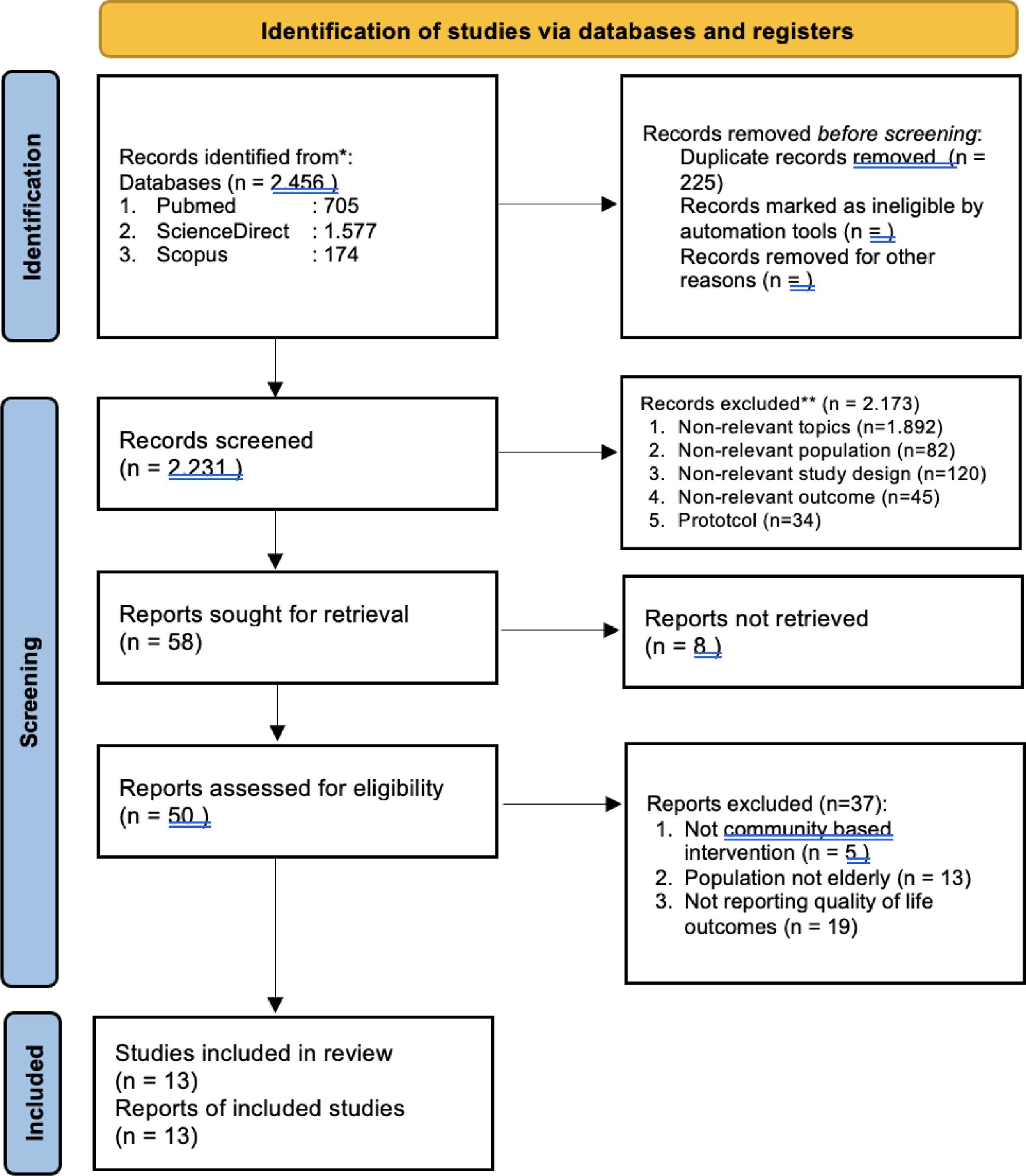
PubMed, Scopus, and ScienceDirect (January 2020 to July 2025).
Selection of studies
Empirical studies, including randomized controlled trials (RCTs), quasi-experimental, and pre–post designs, focusing on community-based physical activity programs for older adults aged ≥60 years compared to inactive controls, standard care, or non-physical interventions.
Data extraction
Independent data extraction and risk of bias assessment using Cochrane RoB 2 and ROBINS-I tools. A systematic narrative synthesis adhering to Synthesis Without Meta-analysis (SWiM) guidelines was conducted.
Results
Thirteen studies involving 2256 older adults were included. Multicomponent programs yielded the most consistent improvements. Significant physical findings included a fall incidence reduction from 51.8% to 31.4%, an 0.81-point increase in Short Physical Performance Battery (SPPB) scores, and a 7.5-point increase in the Barthel Index. Cognitive outcomes improved, evidenced by a 3-point average increase in Montreal Cognitive Assessment (MoCA) scores. Psychologically, resistance and yoga interventions reduced psychological distress by approximately 18%, while high-intensity aerobic exercise yielded an 8.6-point decrease in Hamilton Depression Rating Scale (HAMD-17) scores.
Conclusions
Community-based, multicomponent physical activity interventions sustained for ≥12 weeks at a frequency of 2–5 sessions per week are highly effective in improving physical, cognitive, and psychological outcomes. Integrating culturally adapted practices and digital technologies enhances intervention feasibility, adherence, and long-term engagement.