Introduction
Laparoscopic surgery has transformed surgical practice by reducing complications and recovery times. However, training remains limited due to restricted access to high-fidelity simulators, especially in resource-limited settings. Low-cost simulators have emerged as a feasible alternative to develop essential technical skills. The aim of this study was to design, develop, and validate a low-cost laparoscopic simulator for surgical training.
Methods
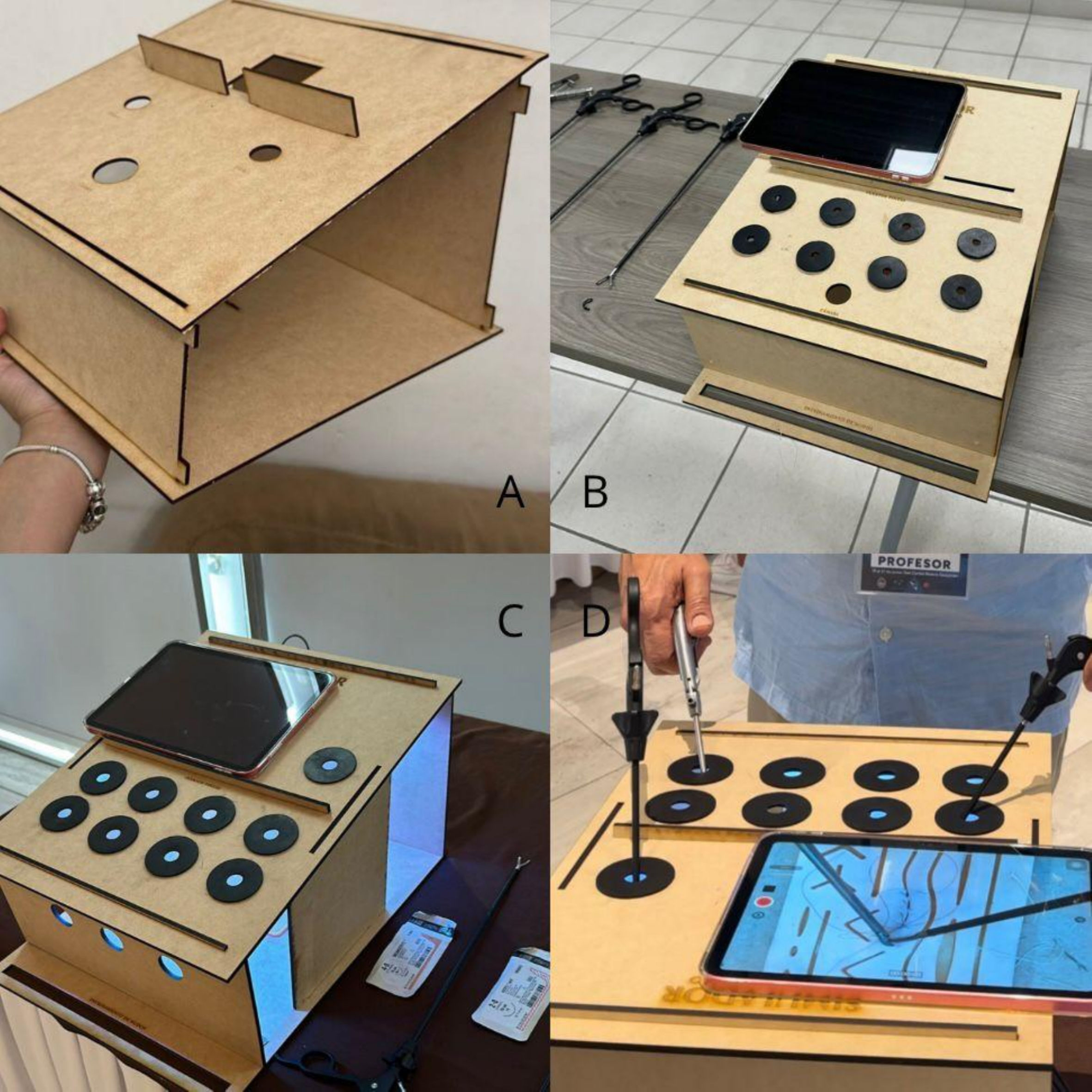
A quasi-experimental study was conducted with 24 general surgery residents. The simulator, built from medium-density fiberboard (MDF) and equipped with ports and a digital camera, was validated by a panel of 10 experts and assessed through the GOALS scale during a peg transfer task. Descriptive statistics and the Kruskal–Wallis test were applied to compare performance according to year of residency.
Results
Experts reported high content and face validity (Aiken’s V ≥ 0.75), highlighting its pedagogical relevance and functionality. Among residents, significant differences were found in performance across training levels (H = 8.70; p = 0.034), particularly between first- and fourth-year residents. The simulator showed discriminative capacity and educational usefulness.
Discussion
The validated simulator represents an accessible and reproducible tool that facilitates training in minimally invasive surgery. Its low cost and effectiveness make it a strategic resource for institutions with budget limitations, supporting progressive and safe skill acquisition while enhancing surgical competence and patient safety.