
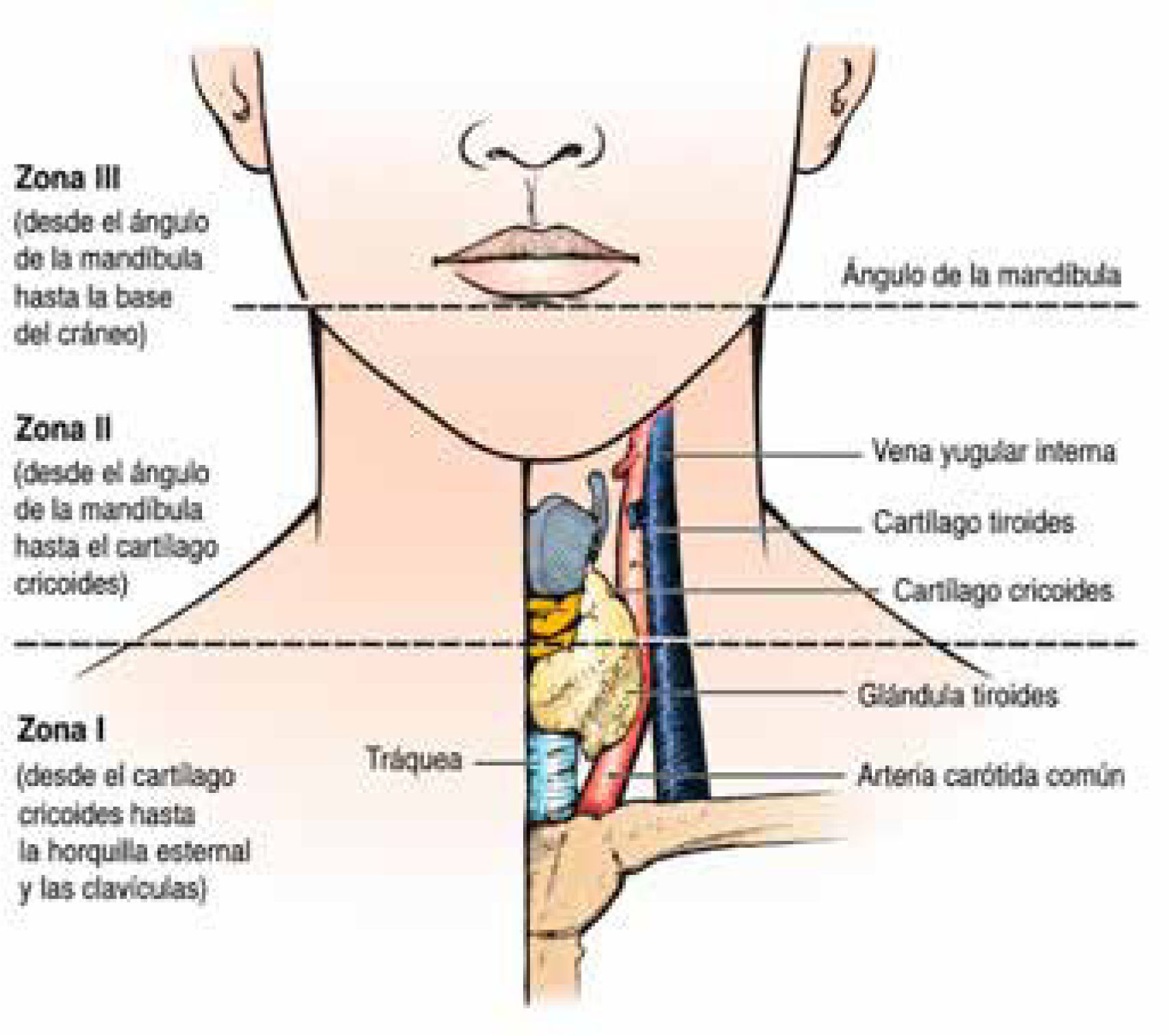
Penetrating cervical injuries present a significant diagnostic and therapeutic challenge due to the high density of vital structures contained within a confined anatomical space. Traditionally, management was guided by the anatomical zone classification (I–III), with routine surgical exploration recommended for zone II injuries. However, over recent decades this approach has evolved toward a selective “no-zone” strategy, based on the patient’s hemodynamic stability, the presence of hard or soft signs of trauma, and the use of high-resolution imaging. Computed tomography angiography has played a central role in this paradigm shift, providing high sensitivity and specificity for detecting vascular and aerodigestive injuries requiring operative intervention, and has become the gold standard for evaluating stable patients. In hemodynamically stable individuals, endoscopic studies play a secondary role but may be used selectively in patients considered for non-operative management. This selective approach has reduced the incidence of negative cervical explorations while maintaining complication rates comparable to more aggressive strategies. This study aims to review the most up-to-date diagnostic and therapeutic approaches to penetrating neck trauma.