Objective
To analyse the utilisation of publicly funded smoking cessation pharmacotherapy within a public health system and to determine the proportion of quit attempts completing the recommended treatment.
Design
Retrospective population-based study.
Site
Public health system of Castilla y León (Spain), covering more than two million inhabitants, 2020–2024.
Participants
Individuals of any age who received reimbursed varenicline, bupropion or cytisinicline for smoking cessation during the study period.
Interventions
None; observational study of reimbursed pharmacotherapy.
Main measurements
Number of quit attempts, pharmacotherapy type, packs dispensed per attempt, age, sex, income-based co-payment status and area of residence. Adherence was indirectly estimated according to completion of the recommended treatment course.
Results
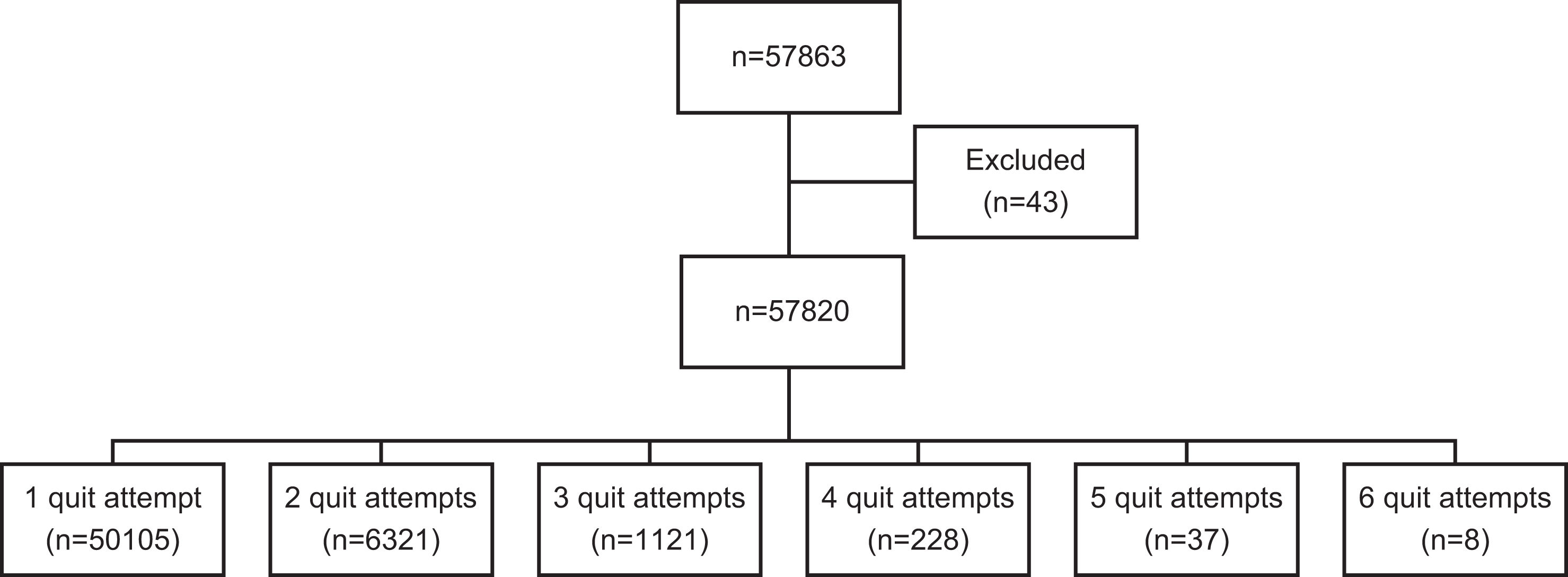
A total of 57,820 individuals used pharmacotherapy for smoking cessation, representing 14.5% of the estimated smoking population, and undertook 67,255 quit attempts. Overall utilisation was limited and adherence to longer treatment regimens was suboptimal. Treatment completion occurred in 26.8% of varenicline and 32.4% of bupropion courses, while cytisinicline predominated. Women made more repeated quit attempts and showed slightly better adherence than men (p<0.001). Pharmacotherapy use was proportionally higher in rural areas, although lower among women in this setting. Lower consumption was observed during summer months and December, without statistically significant differences.
Conclusions
In routine clinical practice, the use of smoking cessation pharmacotherapy remains limited, with low completion of recommended treatment regimens. Differences by sex and socioeconomic status, together with suboptimal treatment completion, highlight the need to strengthen follow-up strategies and improve equity and accessibility within publicly funded cessation programmes.