Introduction
Interprofessional education is essential for preparing health professionals to work collaboratively in clinical settings. However, there is limited availability of validated instruments to assess the intensity of interprofessional collaboration among undergraduate students, particularly in Latin American contexts.
Methods
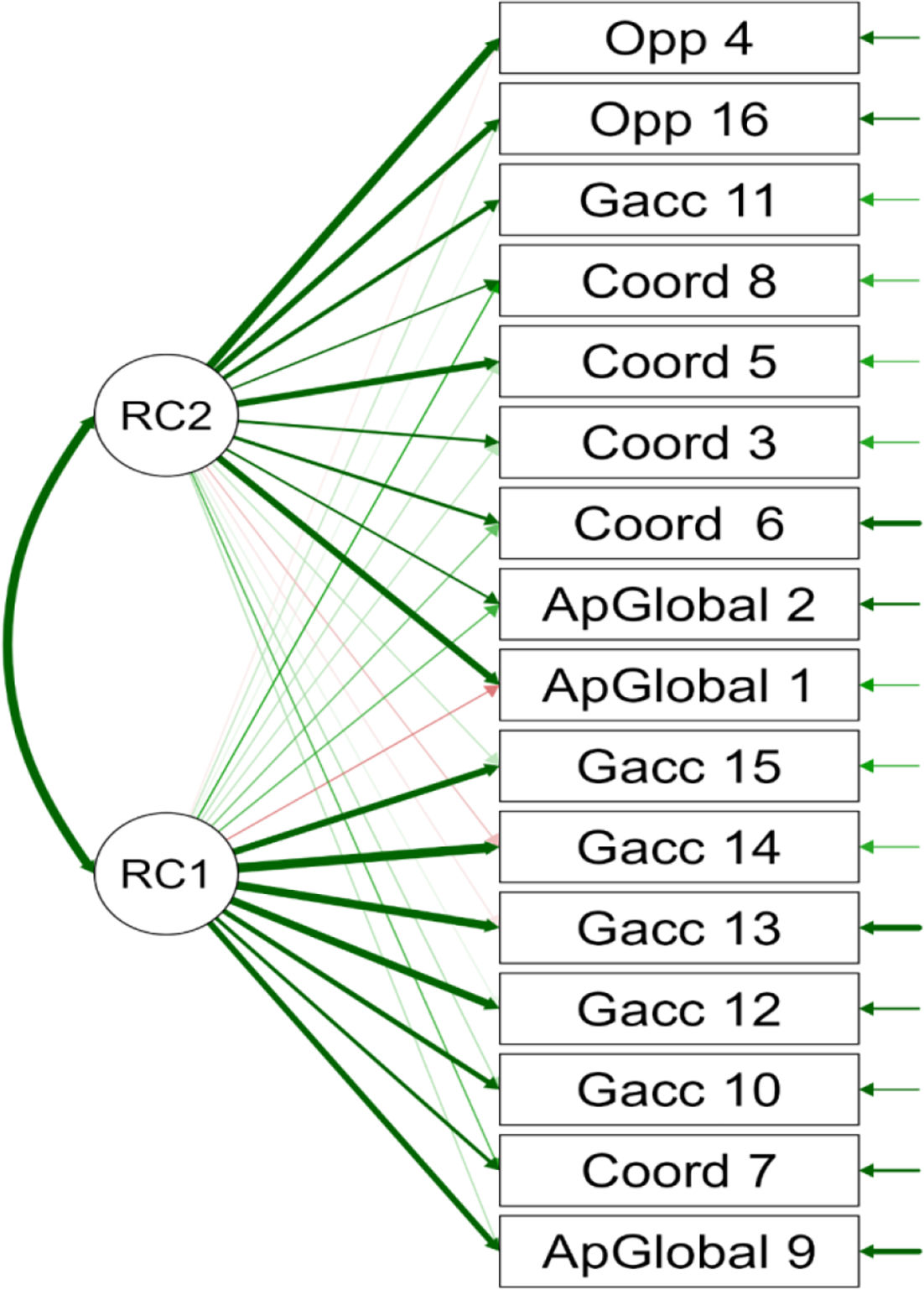
A cross-sectional validation study was conducted between March and July 2024 with 161 final-year undergraduate students from nursing, physiotherapy, speech therapy, nutrition and dietetics, and psychology at the University of Chile. Participants completed the adapted Interprofessional Collaboration Intensity Questionnaire online. Internal consistency was assessed using Cronbach’s alpha and item–total correlations. Construct validity was examined through exploratory factor analysis using principal axis factoring with oblimin rotation.
Results
The instrument demonstrated high internal consistency (Cronbach’s α = 0.93) and adequate construct validity. Sampling adequacy was confirmed (KMO = 0.937; Bartlett’s test of sphericity χ2(120) = 1739.23; p < 0.001). Exploratory factor analysis identified a two-factor structure that integrated the four original theoretical dimensions into broader constructs within this undergraduate student population.
Conclusion
The adapted Interprofessional Collaboration Intensity Questionnaire demonstrated adequate construct validity and high internal consistency among undergraduate health sciences students. A generally high perception of interprofessional collaboration was observed, with significantly higher scores among Physical Therapy and Speech Therapy students. The instrument may be useful for assessing interprofessional collaboration in clinical training settings.