
Introduction
The use of haptic simulation in dental education is rapidly growing as a means of providing safe and repeatable practice in the psychomotor and clinical skills necessary for dentists. This paper aims to map the global research trends of haptic simulation in dental education (2020–2025), as well as analyze its productivity, impact, collaboration, and thematic evolution.
Material and methods
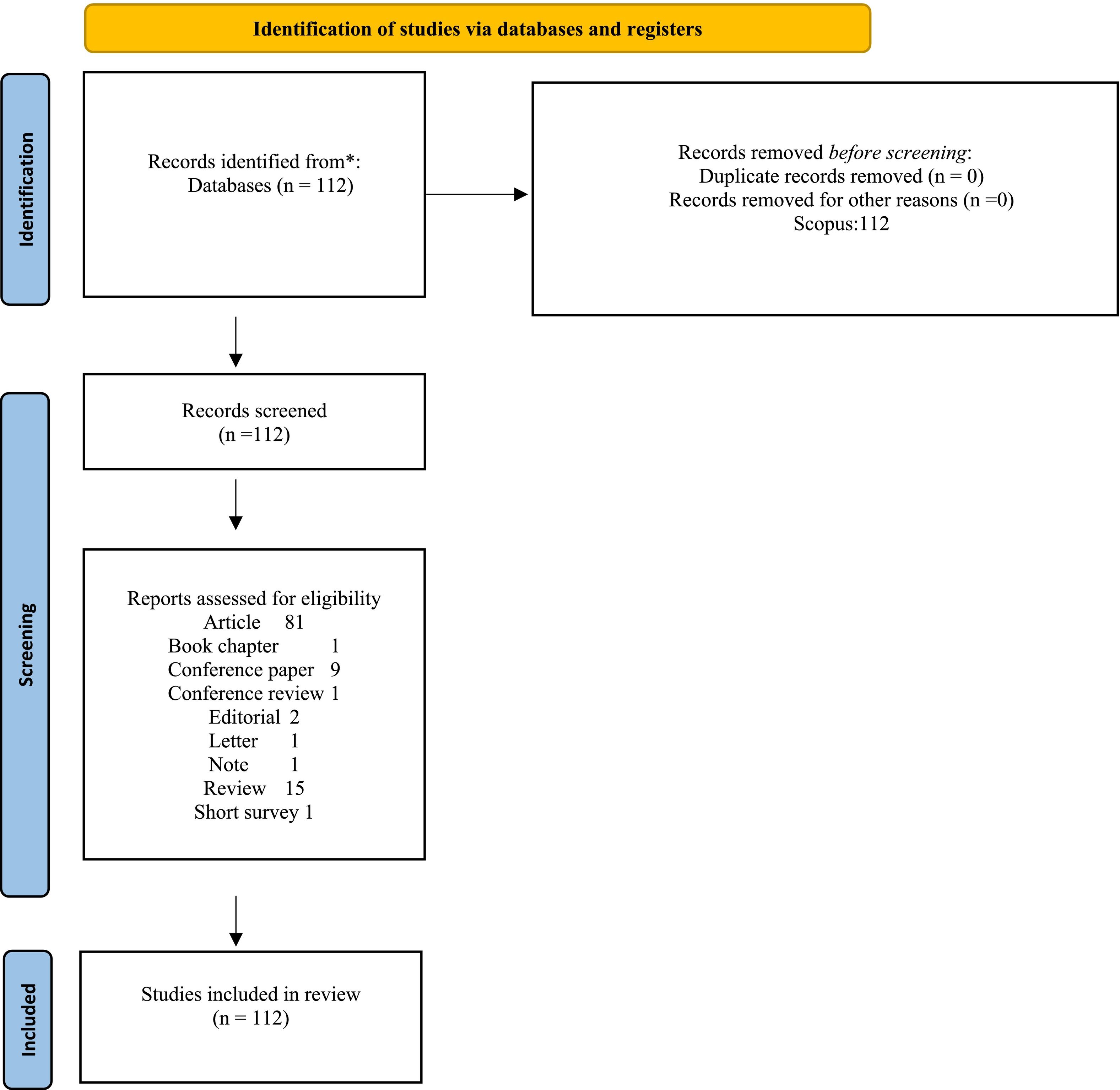
A scientometric study was conducted using Scopus on December 15, 2025. The search was done using a combination of haptic and educational words TITLE-ABS, restricting PUBYEAR to 2020–2025. Records were screened, excluding duplicates, and eligible documents were exported as CSV, fully loaded with metadata. Analyses were performed in SciVal (impact and collaboration), Bibliometrix (R), and VOSviewer (descriptive metrics, co-authorship, co-words and conceptual mapping. Indicators included productivity, citations, CiteScore, SNIP, international collaboration, multiple correspondence analysis, and no language restrictions.
Results
Between 2020 and 2025, the corpus consisted of 112 documents across 56 sources, marking a sudden burst of interest in haptic simulation (growth of 54.4% annually). Papers were of recent vintage (mean of 1.6 years old) and had a mean of 14.7 citations per paper, with a total of 773 cited references. It is a highly collaborative discipline, with 547 authors contributing, a mean of 6.79 co-authors per article, and 31.2% of papers being international collaborations. Institutional impact varied, with highlights suggesting disparate strength e.g. University of Hong Kong (143 citations; 23.8 citations/article); Mahidol University (73 citations; 12.2 citations/article).
Conclusions
Global research in haptic simulation science in dental education reflected accelerating growth, collaboration, and an increase in high-impact outlet publications, progressing toward scientific maturity, and consolidating haptics as a pedagogical innovation that enhances clinical training methods. The findings support placing immersive technologies into existing curricula, alongside continued collaborative efforts internationally to sustain development and expand results.