Background
Although psoriasis prevalence varies by region, age and sex, there is a lack of comprehensive data for Spain. This study used data from the National Health System Primary Care Clinical Database (BDCAP) for 2023 to investigate demographic patterns and regional disparities in psoriasis prevalence.
Methods
We conducted a cross-sectional analysis of BDCAP data to identify psoriasis cases coded with International Classification of Primary Care code S91. Age-standardized prevalence ratios (ASPR) were calculated using the 2013 European Standard Population. To assess regional disparities, standardized prevalence ratios (SPRs) were calculated for each Autonomous Community using indirect standardization.
Results
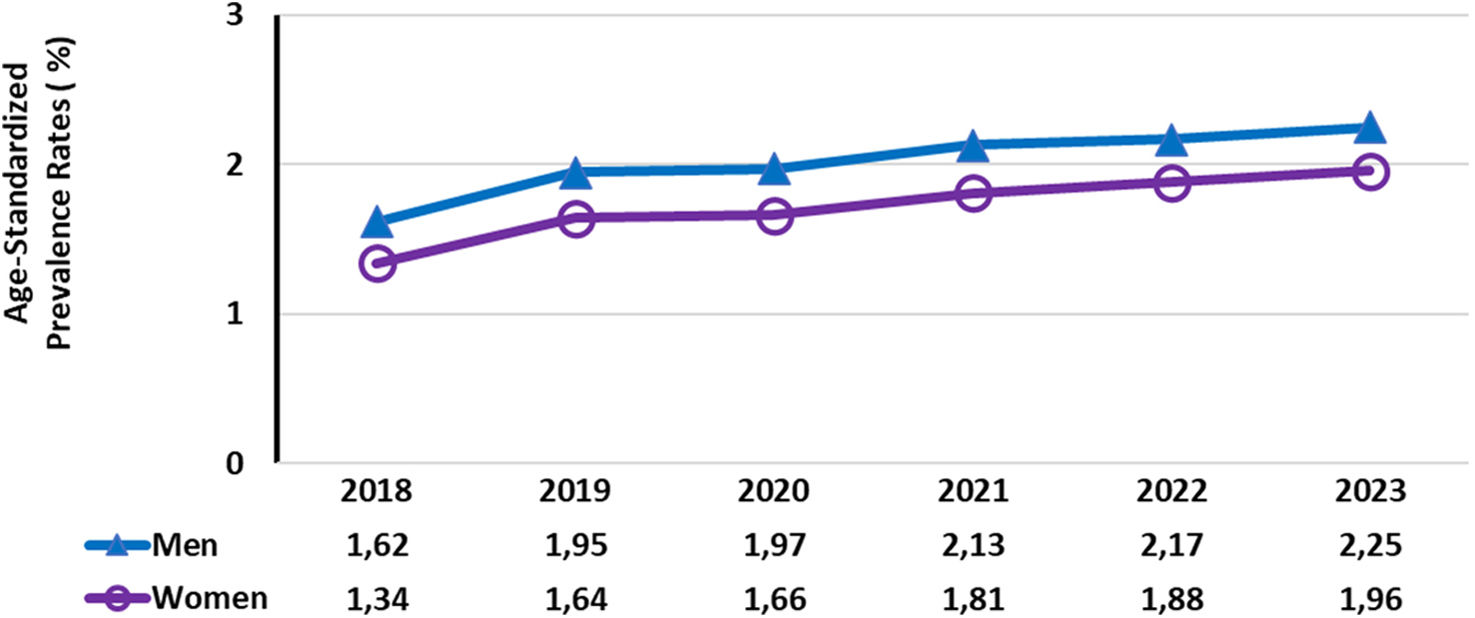
In 2023, a total of 1,050,416 psoriasis cases were identified (51.7% men [n=542,764] and 48.3% women [n=507,652]). ASPRs were 2.25 per 100 person-years in men and 1.96 in women. Prevalence increased with age, peaking at 4.22 in men aged 70–74 and 3.29 in women aged 65–69. Regional ASPRs varied widely, with the highest rates being reported in Navarre (men, 3.17; women, 2.41) and the lowest in Castile-La Mancha (men, 0.27; women, 0.44). SPR analysis highlighted significant geographic disparities, with Navarre and Cantabria showing elevated prevalence, while Extremadura and Castile-La Mancha had lower-than-expected rates.
Conclusions
This study provides critical insights into psoriasis prevalence across Spain, highlighting significant gender and regional disparities. These findings emphasize the need for tailored public health strategies to address varying disease burdens. Future research should focus on elucidating the environmental, genetic, and health care access factors driving these disparities to inform region-specific interventions aimed at improving psoriasis management nationwide.