Objective
To study melanoma incidence trends from 1990 to 2021 in Southern European countries—Portugal, Spain, Italy, Greece—and explore regional and age-period-cohort (A-P-C) patterns.
Methods
Data from the Global Burden of Disease Study 2021 were used to calculate age-standardized incidence rates (ASIRs). Joinpoint regression and age-period cohort (A-P-C) models were applied to identify trends and patterns.
Results
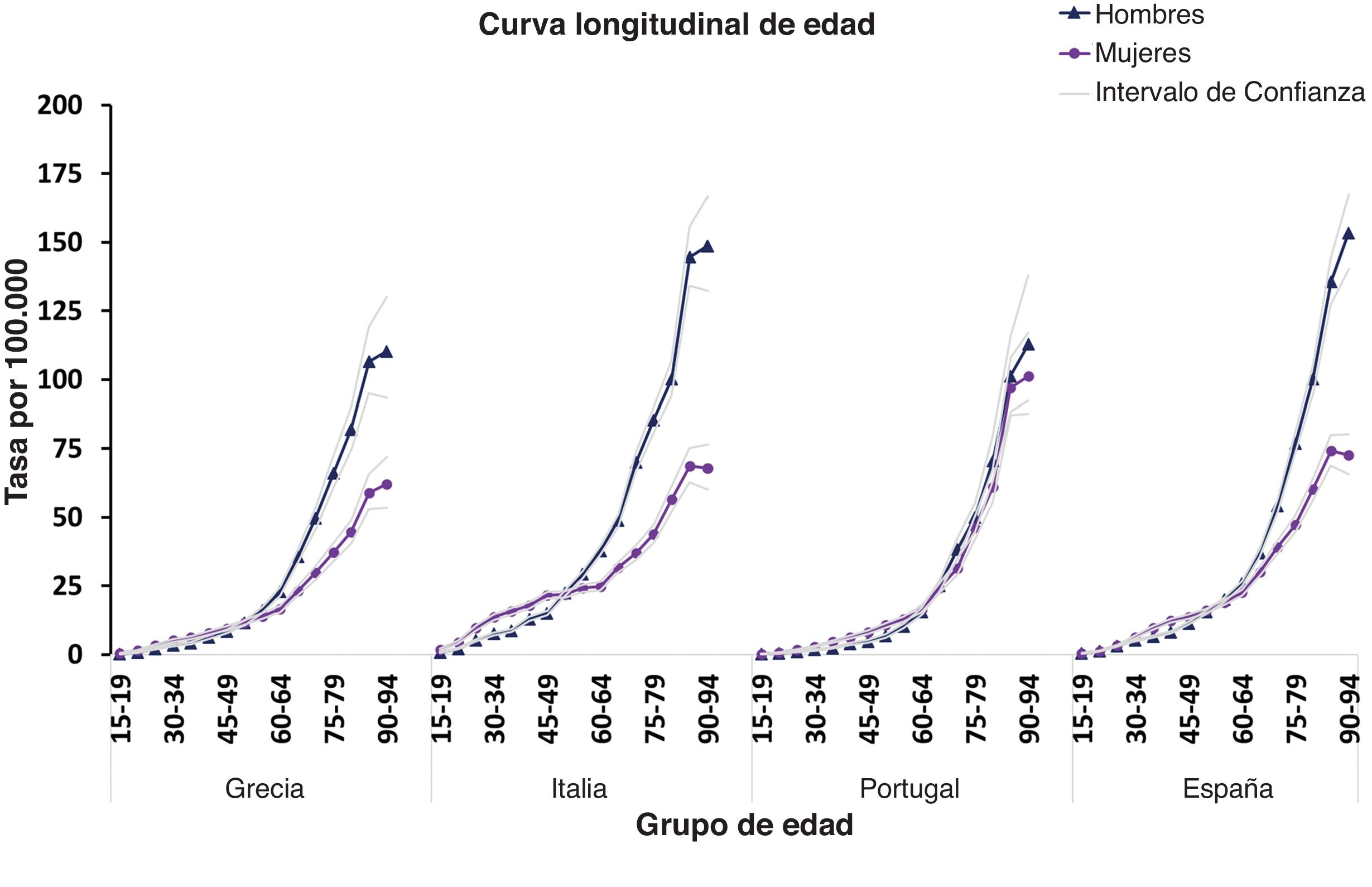
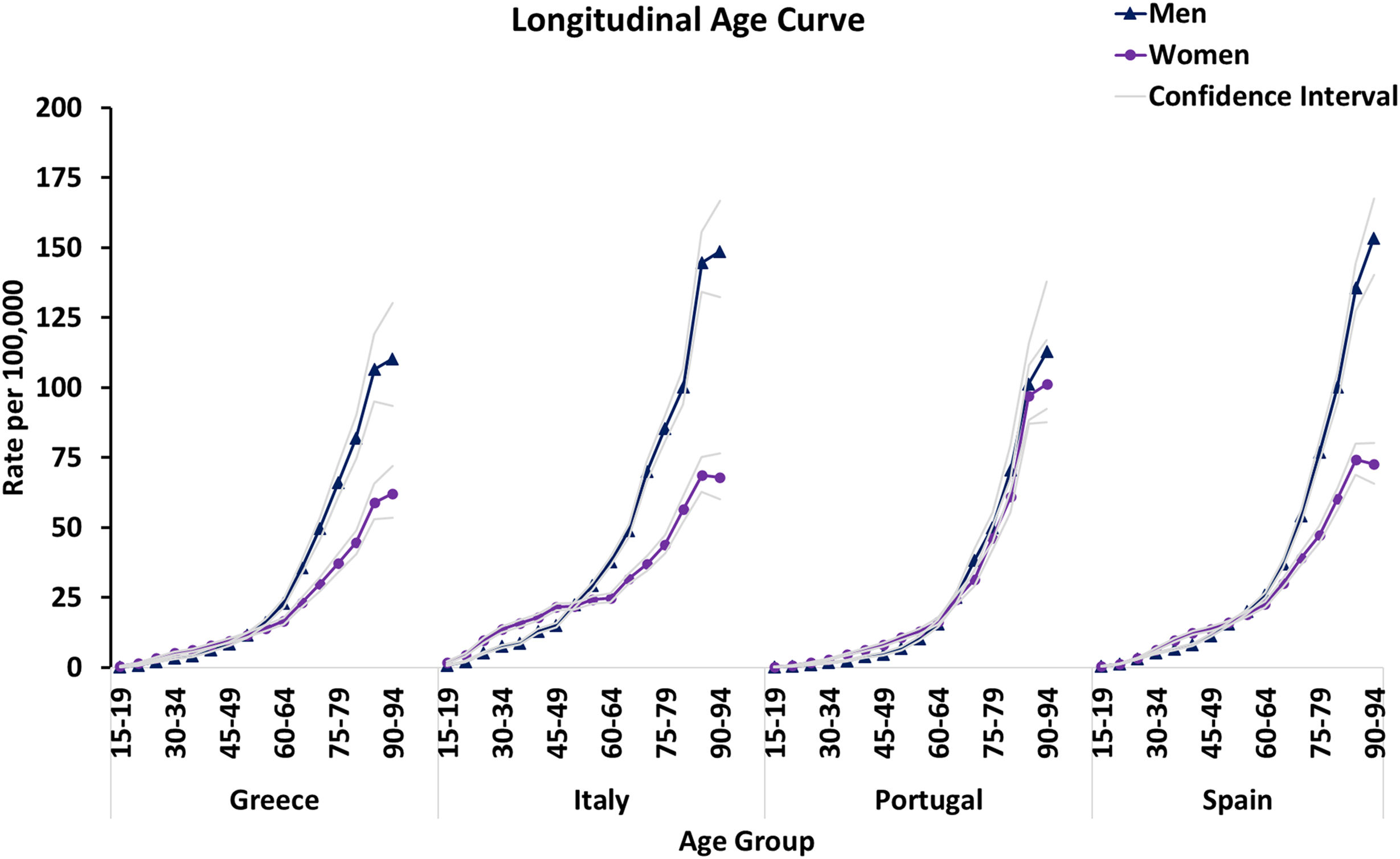
A substantial increase in melanoma ASIRs was observed across all Southern European countries from 1990 to 2021. Joinpoint analysis revealed a potential turning point in the 2010s, with ASIRs stabilizing or declining in younger age groups across all countries. For instance, rates among younger women in Italy, Portugal, and Spain have shown signs of stabilization or decline, while Greek women experienced a continued but slower increase. Men exhibited a similar trend, except for Greece, where the increase rate persisted albeit at a slower pace. Gender differences were evident, with younger women generally facing higher risks vs men but exhibiting a slower rise in incidence with age.
The A-P-C analysis confirmed a pronounced cohort effect, indicating a higher risk for melanoma among earlier birth cohorts. Among younger generations, there is evidence of stabilization or even a decline in incidence rates.
Conclusion
Melanoma rates are rising in Southern Europe, especially among men. While younger populations show promising declines, likely due to sun protection efforts, older generations continue to be affected. Addressing regional disparities and sustaining these positive trends requires ongoing efforts and comprehensive prevention strategies.