Objective
To describe sociodemographic and clinical characteristics, treatments, and incidence of hospital admission and all-cause mortality within a cohort of patients diagnosed with heart failure with reduced ejection fraction (HFrEF) followed up in Primary Care.
Design
Population-based cohort study.
Site
The data source is the Information System for the Development of Research in Primary Care (SIDIAP), which captures information from the Electronic Health Records of Primary Health Care of the Catalan Institute of Health (approximately 80% of the Catalan population).
Participants
Adults with a diagnostic code of HFrEF in 2018–2022.
Interventions
Not applicable.
Main measurements
Socio-demographic and clinical characteristics, drug exposure, hospitalizations due to heart failure and all-cause mortality.
Results
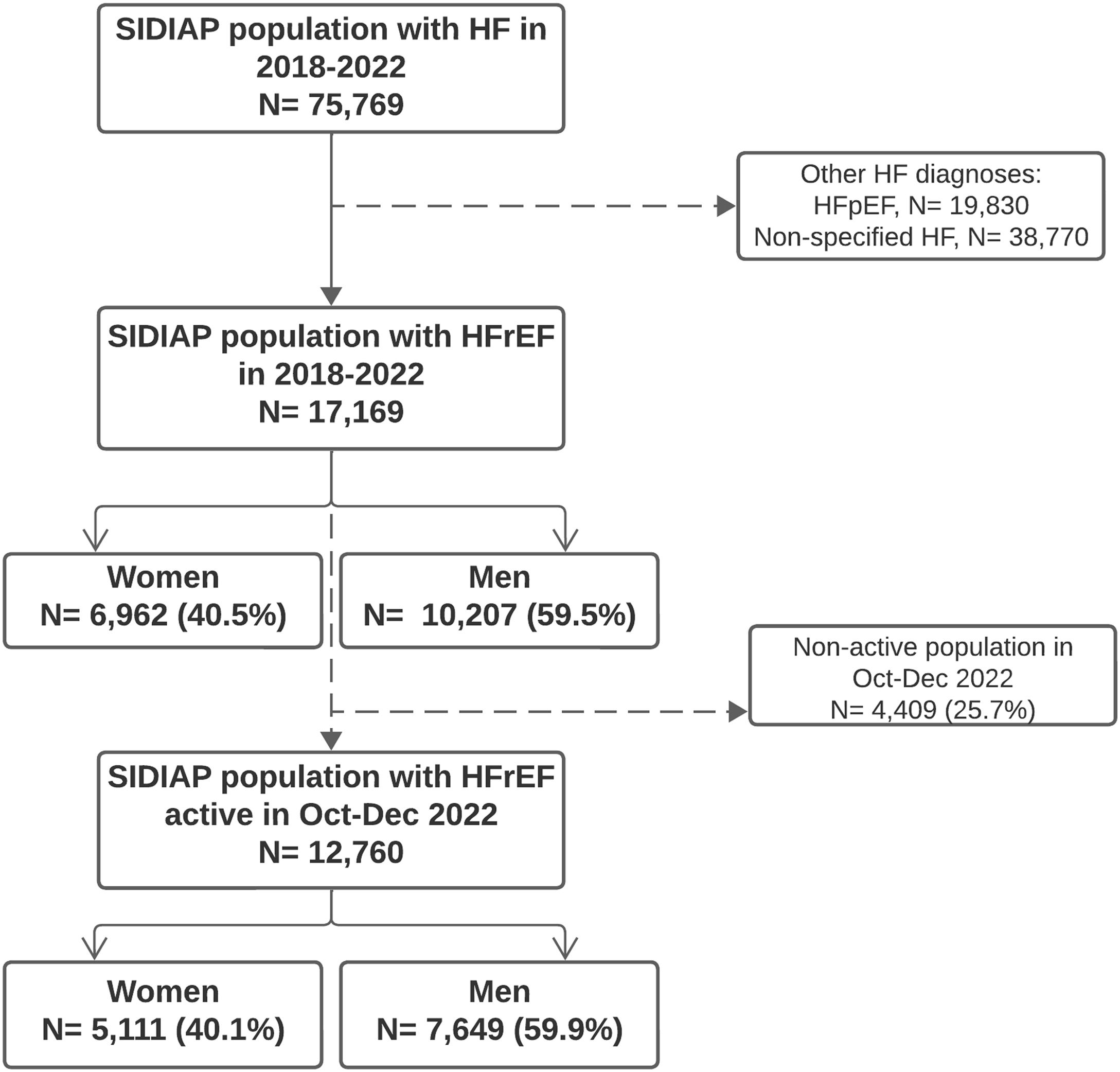
We included 17,169 patients; 59.5% men and 40.5% women. We found differences between men and women in clinical characteristics and in drug combinations, and suboptimal use to recommended therapies, being better for men than for women. Women had higher hospitalization (44.6% vs 42.1%) and all-cause mortality rates (27.2% vs 25.3%). Hazard ratio of hospitalization was higher in older than 60, with increasing NYHA, diabetic patients and in previously hospitalized.
Conclusions
We observed sex disparities in baseline characteristics, in drug use for heart failure, and in adherence to treatment recommendations. Women had higher rates of hospital admissions and all-cause mortality, although the hazard ratio for hospitalization risk was similar between sexes. Age over 60, increasing NHYA, diabetes and prior heart-failure hospitalization resulted in higher risk of hospital admission. These findings highlight the importance of tailoring treatment strategies according to clinical conditions.