Background
Randomized clinical trials (RCTs) supporting advanced treatments for atopic dermatitis (AD) involve highly selected patients, limiting their generalizability.
Objective
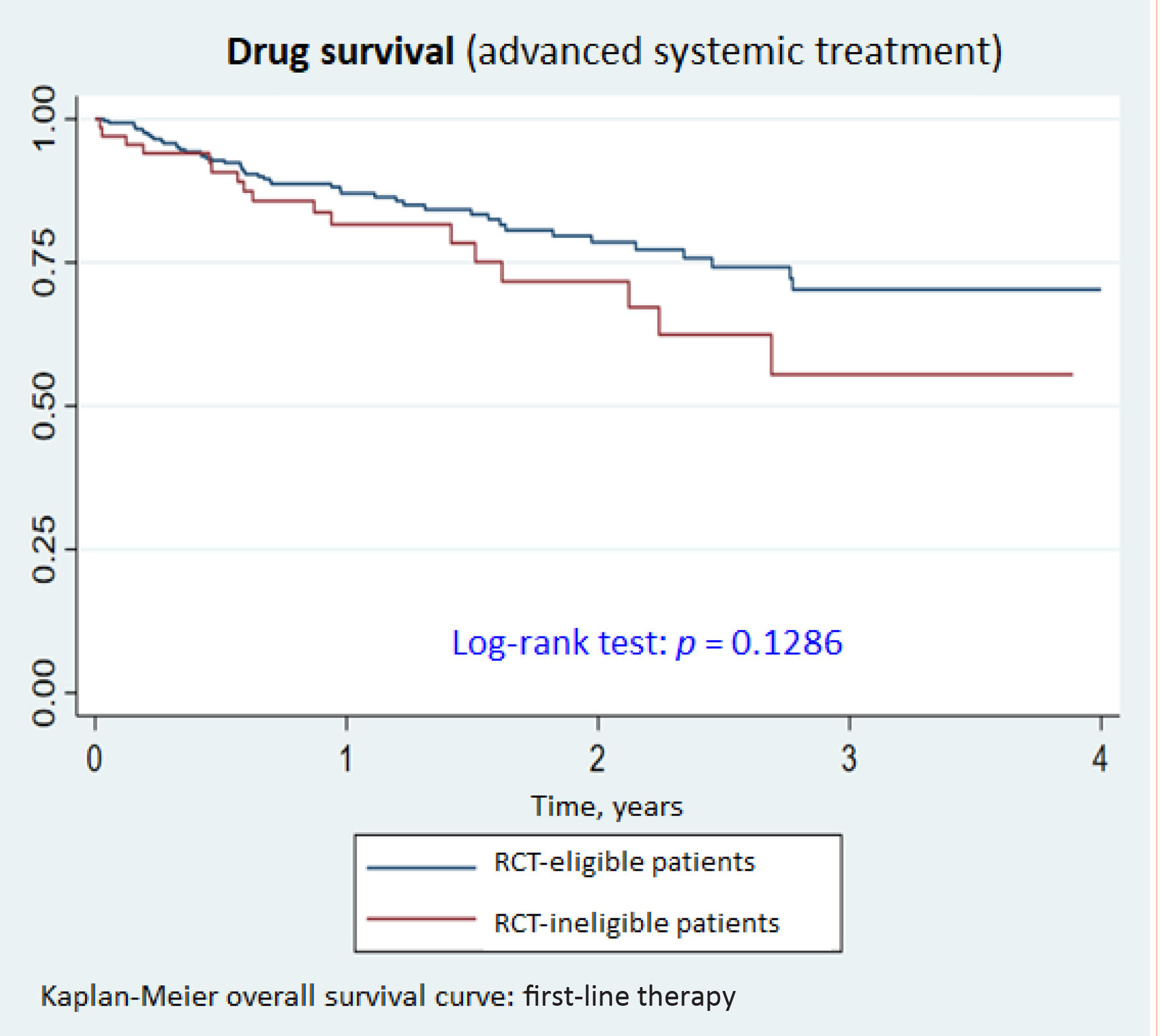
To determine the proportion of adults on advanced systemic therapy for AD in clinical practice who are underrepresented in RCTs and compare the safety and drug survival of these treatments between RCT-eligible and RCT-ineligible patients.
Material and methods
Descriptive and comparative analysis of data from the Spanish Atopic Dermatitis registry BIOBADATOP. Patients were deemed RCT-ineligible if they met, at least, 1 of 8 common exclusion factors: age≥65 years; pregnancy desire pregnancy or lactation; uncontrolled hypertension, cardiovascular disease, or diabetes; chronic kidney disease; cancer diagnosis; liver disease; history of tuberculosis, human immunodeficiency virus or hepatitis B or C infection; and active or acute infection.
Results
Of the 366 adults in BIOBADATOP on advanced systemic therapies for AD, 18.3% would be considered ineligible to participate in RCTs. Ineligible patients were older and had more comorbidities than eligible patients. Inclusion of an EASI score<16 at baseline in the sensitivity analysis increased the proportion of ineligible patients to 37.2%. Janus kinase inhibitors were used less often as a first-line therapy in RCT-ineligible patients. Although serious adverse events were significantly more common in ineligible patients, this difference was lost after adjusting for age, sex, and comorbidities.
Conclusions
Overall, 18.3% of real-world patients with AD—and 37.2% including those with EASI<16—are underrepresented in RCTs. Age and comorbidities influence safety outcomes and should be considered when taking treatment decisions and designing RCTs.