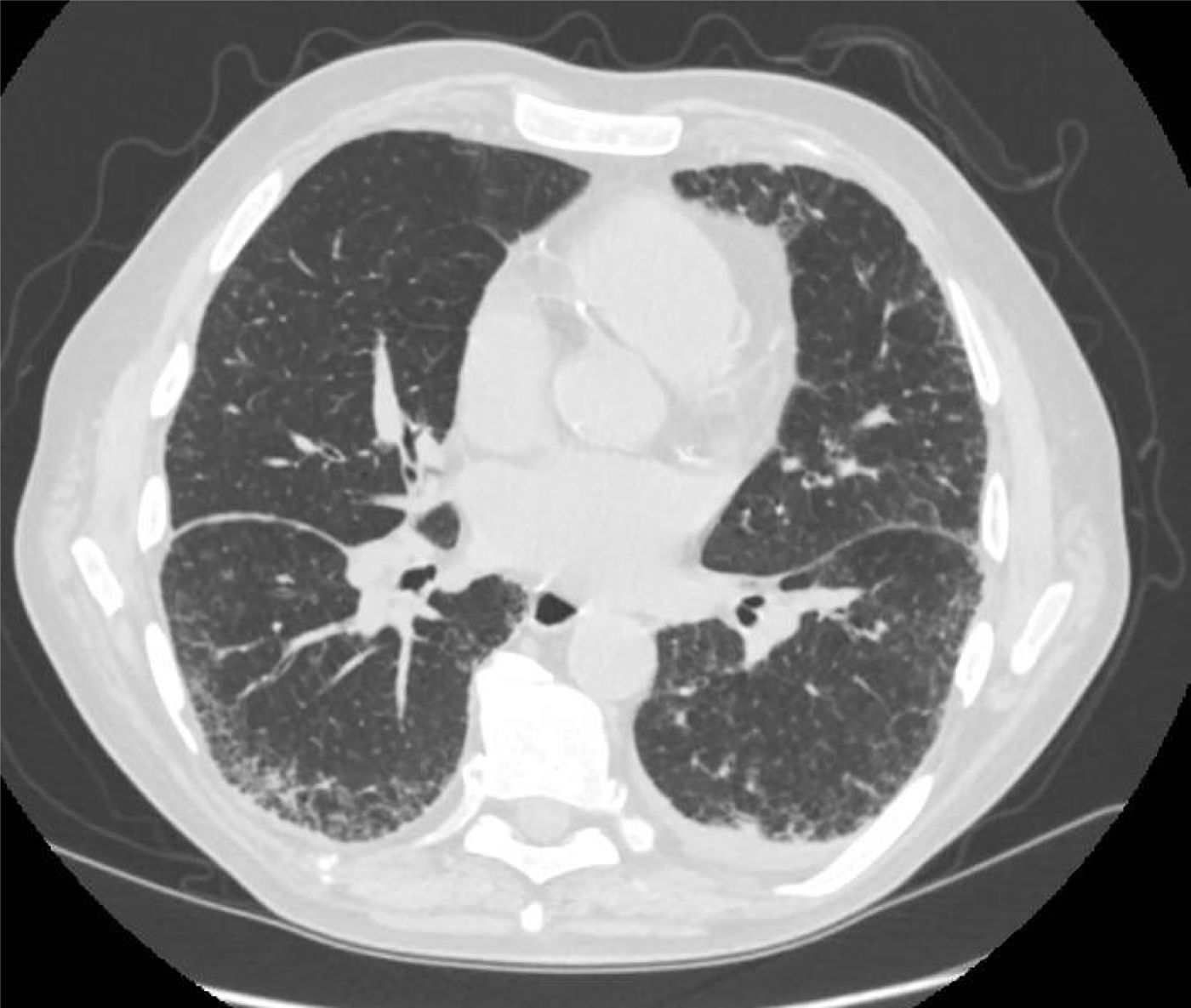
VEXAS syndrome (Vacuoles, E1 enzyme, X-linked, Autoinflammatory, Somatic) is a recently described hemato-inflammatory disorder caused by somatic mutations in the UBA1 gene, associated with systemic inflammation and myelodysplastic syndromes. Pulmonary involvement is increasingly recognized but remains underdiagnosed. We report a 66-year-old man with rheumatoid arthritis and low-risk myelodysplastic syndrome, evaluated for suspected interstitial lung disease. High-resolution computed tomography (HRCT) showed a probable usual interstitial pneumonia (UIP) pattern with radiological progression. Pulmonary function tests revealed mild airflow obstruction and diffusion impairment, without clear functional progression. A somatic UBA1 mutation confirmed VEXAS syndrome. After multidisciplinary discussion, no antifibrotic therapy was initiated due to the absence of clinically significant functional decline and the suspected inflammatory/hematologic origin of lung involvement. A watchful waiting strategy with close follow-up was adopted, and azacitidine was initiated. This case highlights the importance of considering VEXAS syndrome in interstitial lung disease with systemic features, particularly in the presence of cytopenias.