
Introduction
Evidence on mobile-assisted flipped classroom models remains limited in developing contexts, particularly in public health education. This study examines the associations between mobile-assisted flipped learning and students’ perceived academic performance among undergraduate public health students in Vietnam.
Subjects and methods
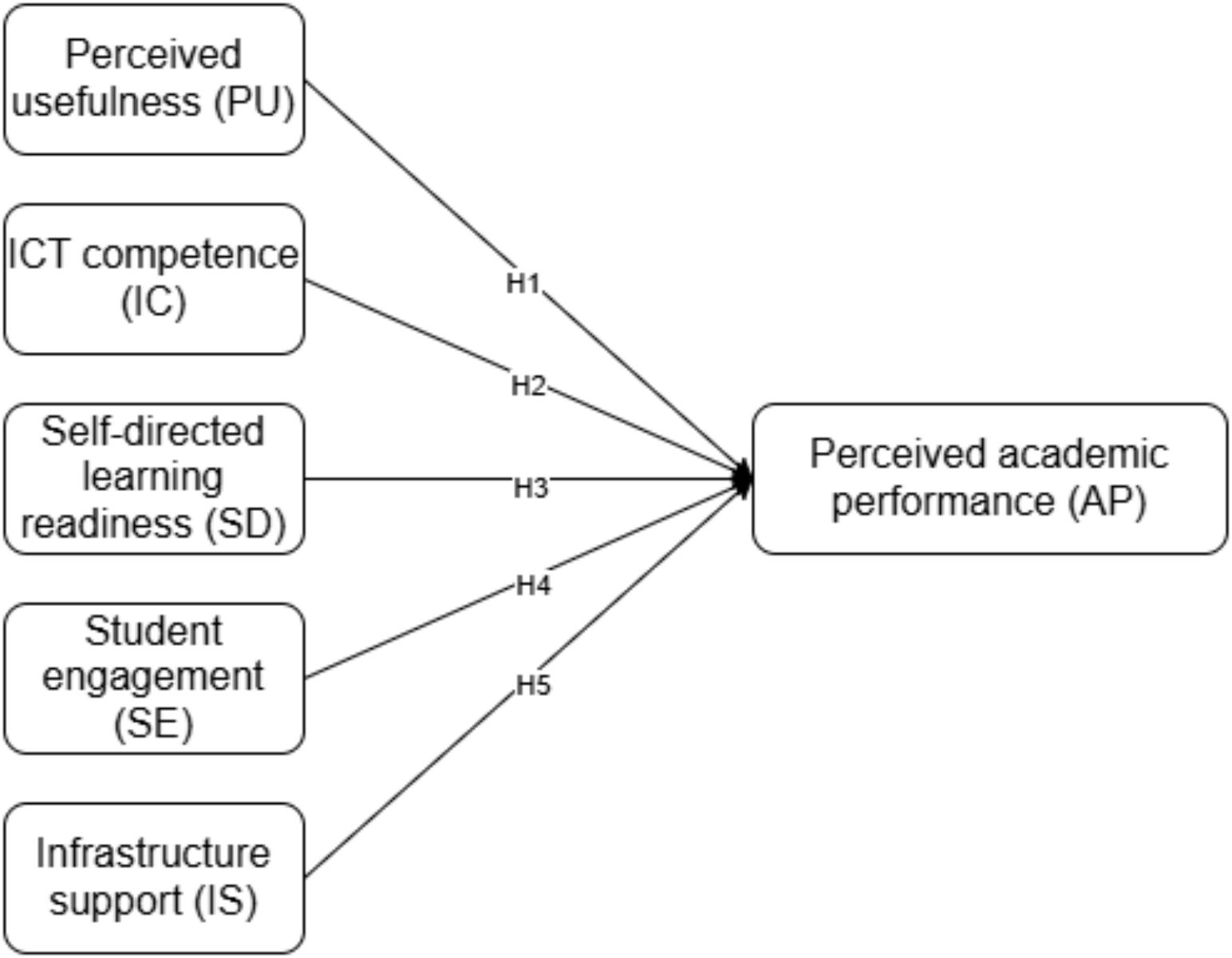
A cross-sectional survey was conducted with 212 students enrolled in a Health Economics course implementing mobile-assisted flipped activities. Five factors, including perceived usefulness, ICT competence, self-directed learning readiness, student engagement, and institutional infrastructure support, were measured using a structured questionnaire. Partial Least Squares Structural Equation Modelling (PLS-SEM) was used to assess measurement reliability, validity, and the relationships among the study variables.
Results
All five factors were positively and significantly associated with students’ perceived academic performance (p < 0.05). Student engagement showed the strongest association, followed by perceived usefulness, self-directed learning readiness, ICT competence, and infrastructure support.
Conclusion
The findings suggest that stronger engagement, digital competence, and institutional readiness are associated with higher levels of perceived academic performance in mobile-assisted flipped classroom settings. This study provides context-specific evidence to inform the integration of mobile-supported, student-centred learning approaches in public health education in Vietnam.