Background
Cutaneous melanoma has multiple risk factors, including occupation and place of residence, which may influence its development and histopathological characteristics.
Objectives
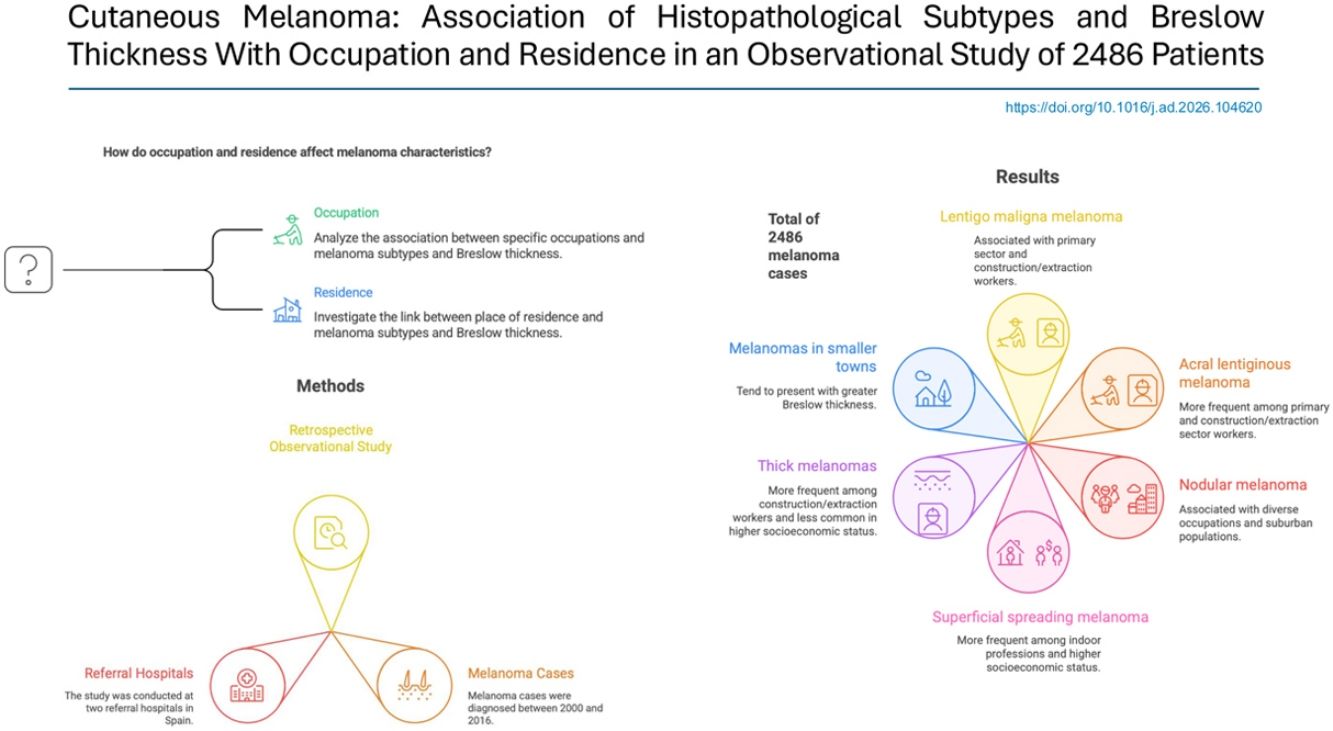
To analyze the association between melanoma histopathological subtypes and Breslow thickness and patients’ occupation and place of residence.
Methods
A retrospective observational study was conducted including melanoma cases diagnosed between 2000 and 2016 at two referral hospitals in Spain. Data on patients’ main occupation, place of residence at diagnosis, and melanoma characteristics were collected. Statistical significance was established at P<.05. Correspondence analysis was also used to explore associations between occupation, place of residence, and melanoma characteristics.
Results
A total of 2486 melanoma cases were included. Lentigo maligna melanoma was significantly associated with workers in the primary sector (P=.010) and the construction or extraction sector (P=.032). Acral lentiginous melanoma was more frequent among workers in the primary (P=.002) and construction or extraction sectors (P=.006). Nodular melanoma was associated with a heterogeneous range of occupations and with suburban populations (P=.025). Superficial spreading melanoma tended to occur more frequently among indoor professions and occupations associated with higher socioeconomic status, as suggested by correspondence analysis. Thick melanomas were more frequent among workers in the construction or extraction sector (P=.032) and less common among professions associated with higher socioeconomic status (P=.001). Melanomas diagnosed in smaller towns tended to present with greater Breslow thickness (P<.001).
Conclusions
Occupation and place of residence appear to influence melanoma histopathological subtype and Breslow thickness. These findings highlight the importance of targeted melanoma prevention and screening strategies in high-risk populations.