Background and objective
Patients with psoriasis and concomitant diabetes mellitus (DM) may be vulnerable to diabetes-related adverse events (DM-AEs). This study aimed to evaluate the incidence of DM-AEs associated with systemic treatments used in patients with psoriasis and DM.
Methods
We conducted a prospective cohort study using data from the BIOBADADERM registry. We calculated incidence rates (IRs) of DM-AEs for each systemic treatment class, including biologics (tumor necrosis factor [TNF] inhibitors, interleukin [IL]-12/23 inhibitors, IL-17 inhibitors, and IL-23 inhibitors), conventional systemic therapies (methotrexate [MTX], cyclosporine, and acitretin), and apremilast (APR). The primary outcome was the adjusted incidence rate ratio (aIRR) for DM-AEs comparing patients receiving MTX with those receiving other systemic therapies using Poisson regression models adjusted for potential confounders.
Results
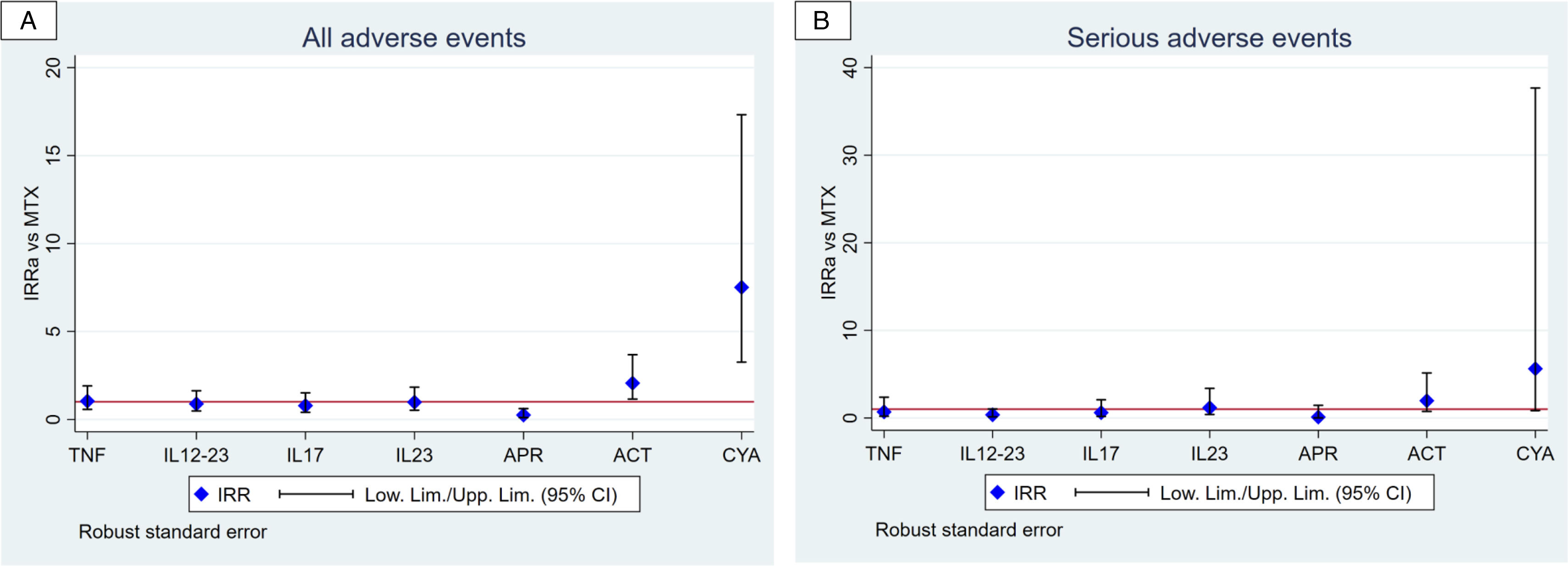
The study included 732 patients, 1401 treatment cycles, and 2865 person-years (PYs) of follow-up. APR (aIRR, 0.30; 95% CI, 0.10–0.60) was associated with a significantly lower risk of DM-AEs compared with MTX. Cyclosporine (aIRR, 7.50; 95% CI, 3.30–17.30) and acitretin (aIRR, 2.10; 95% CI, 1.20–3.70) were associated with a higher risk compared with MTX.
Conclusions
Among patients with psoriasis and DM, APR was associated with a lower incidence of DM-AEs, whereas cyclosporine and acitretin were associated with higher incidences compared with MTX.