Objective
To describe the relationship between mortality due to Alzheimer disease (AD) and sociodemographic factors in the Centre Region of Argentina between 2000 and 2019.
Methods
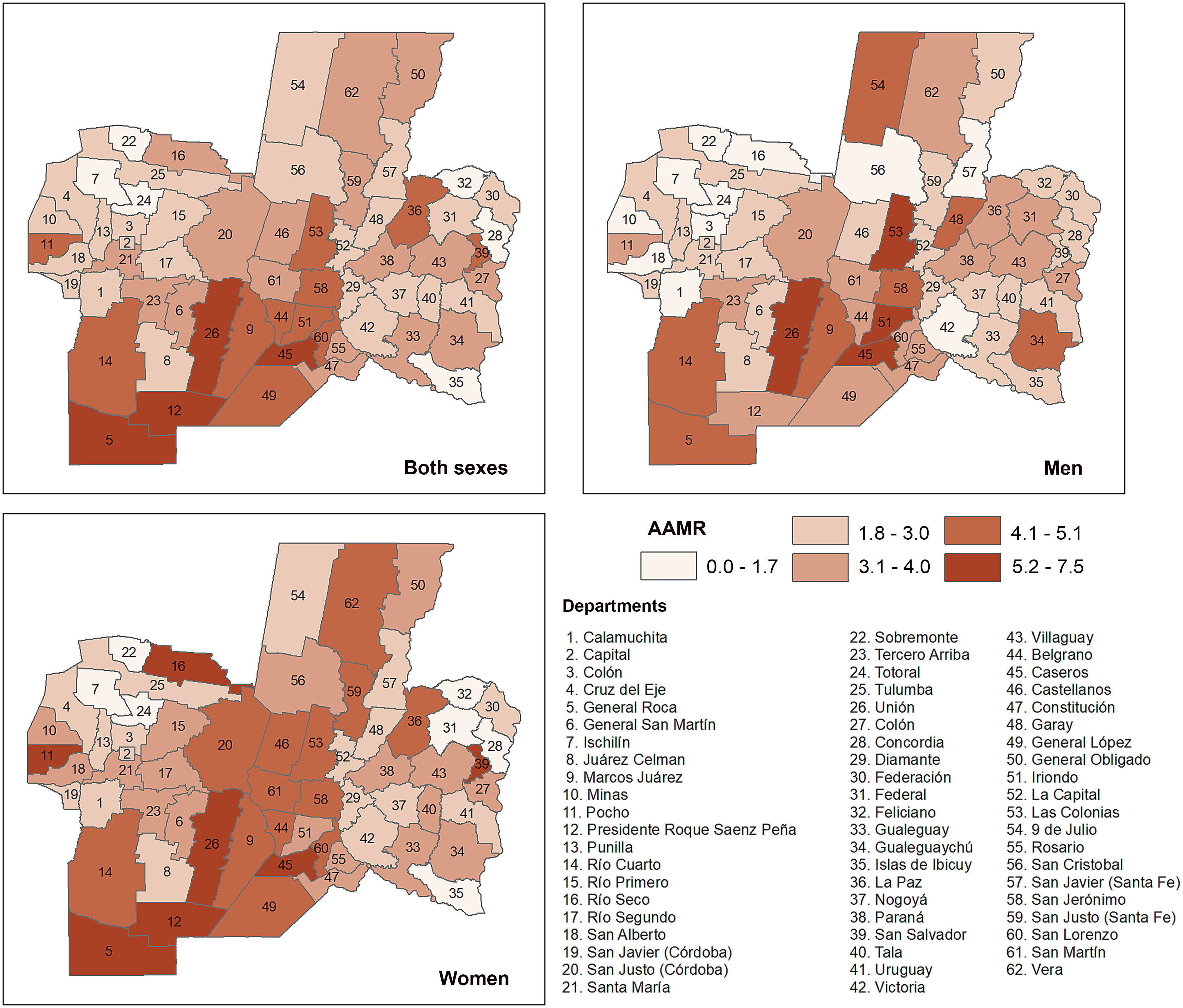
A retrospective ecological study was conducted across the 62 departments of the provinces of Córdoba, Entre Ríos, and Santa Fe. Age-adjusted mortality rates were analysed in relation to education level, structural poverty, percentage of rural population, and dependence on public health services, using census data and official mortality records. Spearman rank correlation coefficients were applied.
Results
A total of 8304 deaths due to AD were recorded, with an age-adjusted mortality rate of 3.3 deaths per 100,000 population; mortality was higher among women. Mortality due to AD showed significant negative associations with indicators of structural poverty and dependence on public health services, but not with average education level or degree of rurality in the departments.
Conclusions
Mortality due to AD is more closely linked to historical and current socioeconomic deprivation than to education or percentage of rural population, suggesting that poverty shapes the mortality profile in the departments of the Centre Region of Argentina.