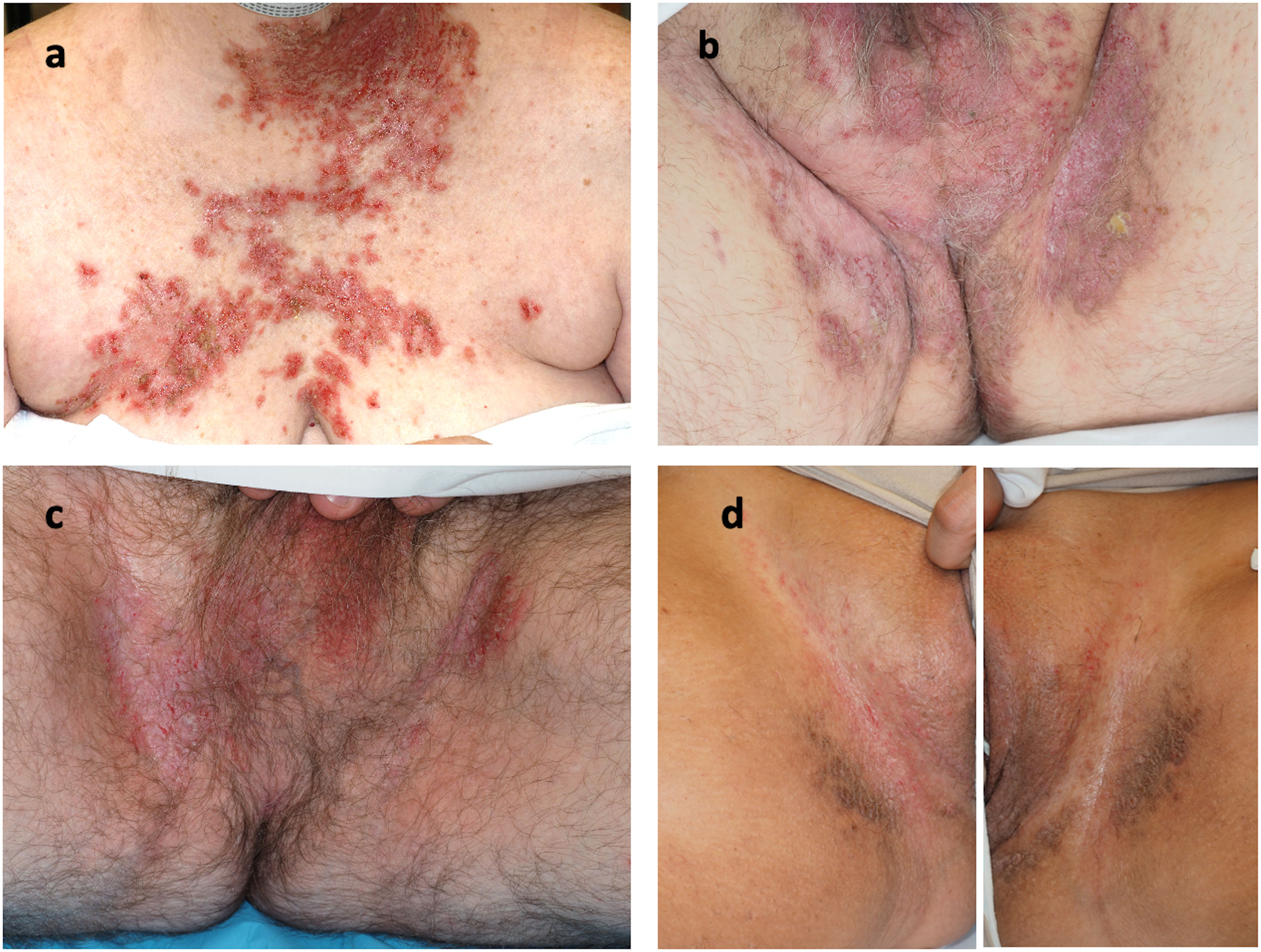
Hailey-Hailey disease (HHD) is a rare autosomal dominant genodermatosis characterized by blisters and erosions in skin folds, significantly impairing patients’ quality of life. HHD is caused by mutations in the ATP2C1 gene, which encodes the calcium transport protein SPCA1. Approximately 290 unique mutations have been identified to date; however, data remain scarce regarding mutations affecting patients in certain areas of Europe. The aim of this study was to analyze the ATP2C1 gene in a cohort of Spanish patients with HHD and to explore a possible genotype–phenotype correlation. We detected 10 mutations, including 9 unique variants, of which 6 were classified as likely pathogenic and 5 were novel. Additionally, we identified 3 novel variants of uncertain significance with a probable causal role. Our results expand the knowledge of genetic heterogeneity in European patients with HHD and identify new variants not previously reported.